Rated 4.8 stars on Google
In-network:UnitedHealthcareOptumTriCare WestCigna/ASH· SDRC & IRC Early Start Vendor
Call or Text (760) 235-4748

Free Printable · Speech & Language

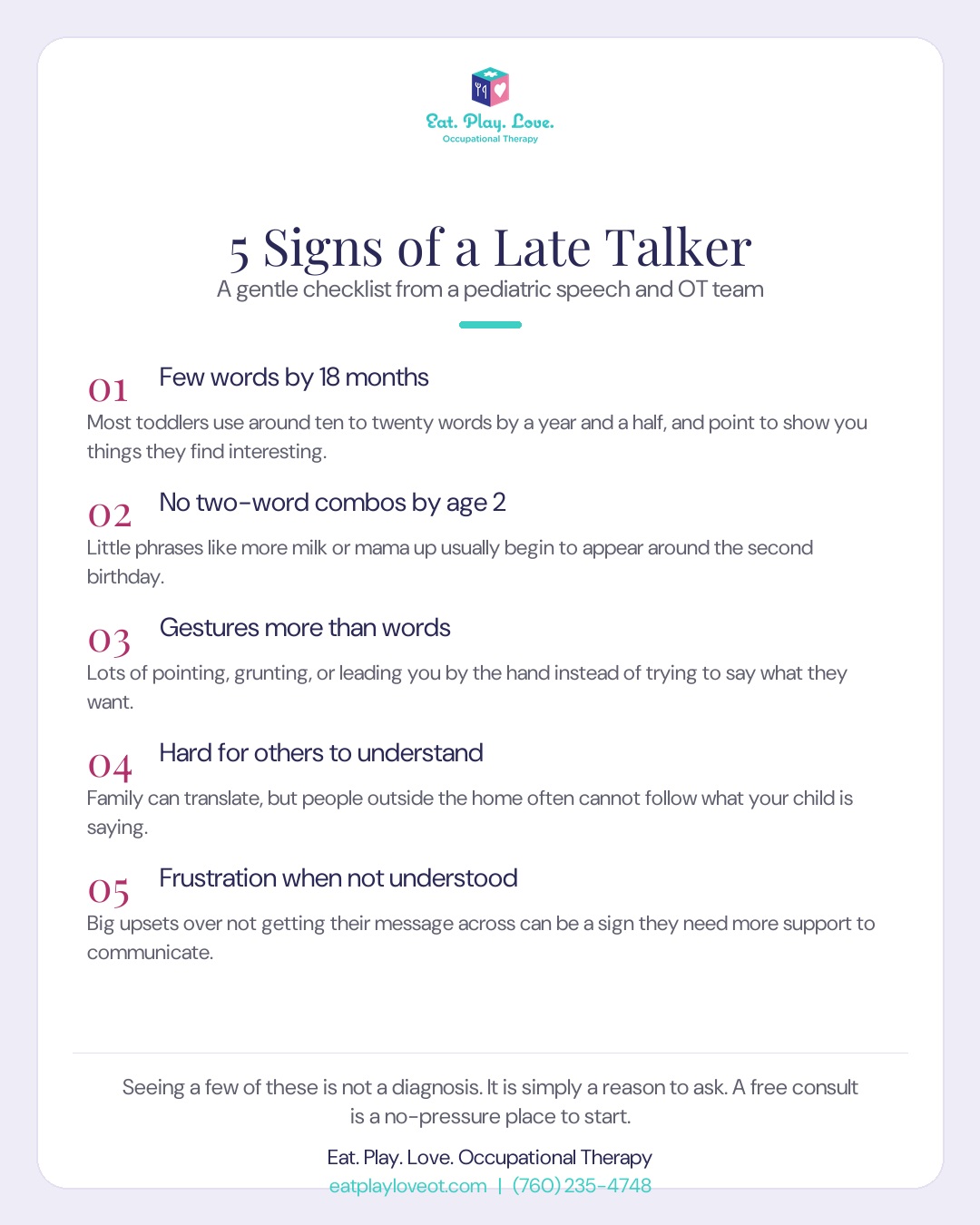
5 Signs of a Late Talker

A gentle checklist from a pediatric speech and OT team — so you can stop wondering and know what to watch for.

Instant download — no waiting on an email. We'll send occasional OT tips and you can unsubscribe any time.

5 Signs of a Late Talker checklist from Eat. Play. Love. Pediatric Therapy

"He'll talk when he's ready" is the most common advice parents get, and sometimes it's right. But there are a handful of signs that mean a little support now could save a lot of frustration later — for both of you.

This checklist walks through the five signs we look for: how many words by 18 months, two-word combos by age two, gesturing instead of speaking, how well people outside the family understand them, and the frustration that builds when a message doesn't land.

Seeing a few of these is not a diagnosis. It's simply a reason to ask. A free consult is a no-pressure place to start.

Written by Lindsey Wood, MOT, OTR/L — pediatric occupational therapist and founder of Eat. Play. Love.

What's inside

The 5 signs, each explained in plain parent language
What's typical at 18 months and at age 2
When gesturing is fine and when it's a flag
The "outside the family" understandability check
What to do next if a few of these sound familiar

Want eyes on your actual kid?

A printable is a great start. If something still feels off, a free consult is the fastest way to find out whether your child needs support — and we'll tell you honestly either way.
Book a Free Consult

More free printables

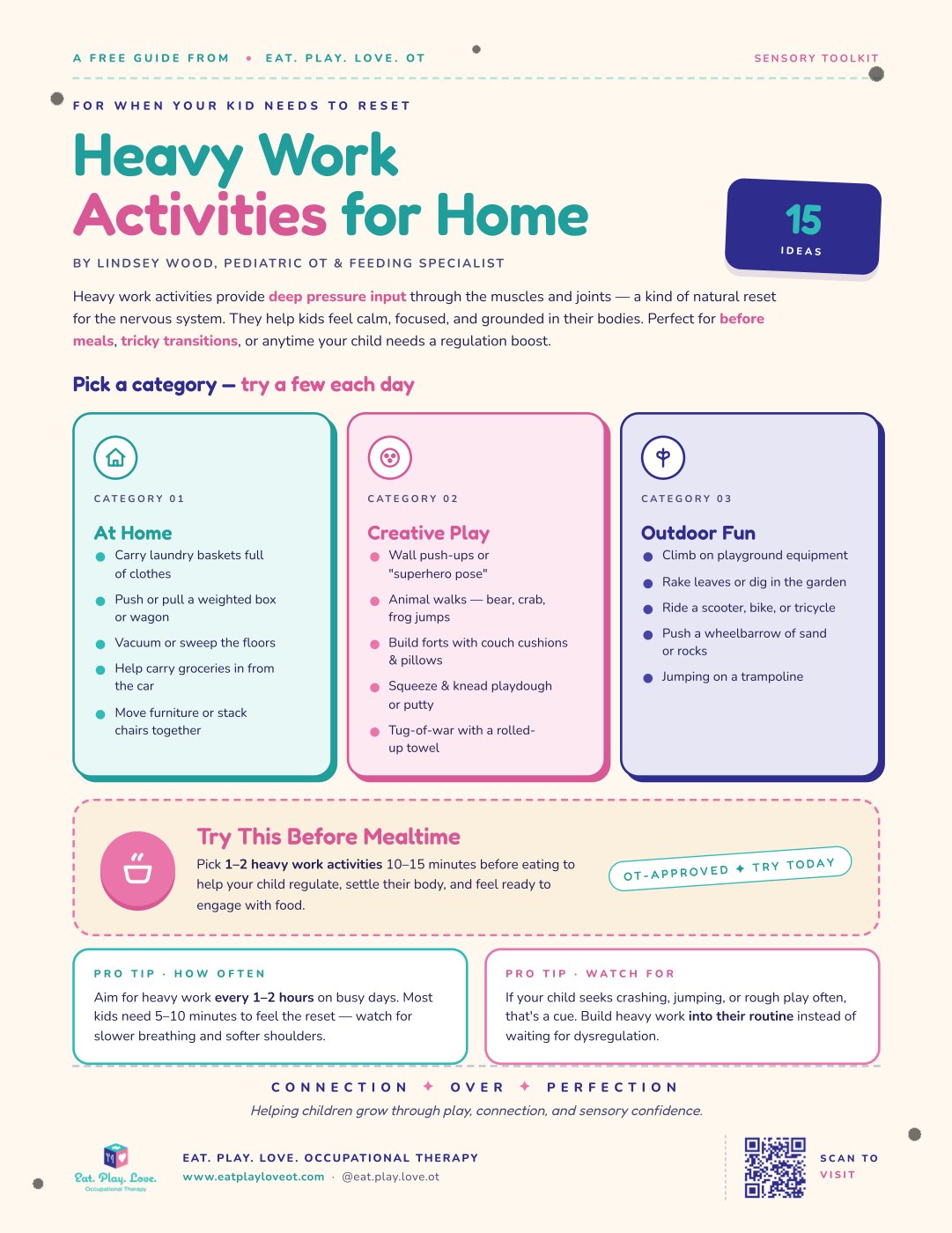
Heavy Work Activities for Home sensory toolkit from Eat. Play. Love. Occupational Therapy

Sensory Toolkit: Heavy Work Activities for Home

15 OT-approved heavy work ideas for when your kid needs to reset, plus the simple trick to try before meals.

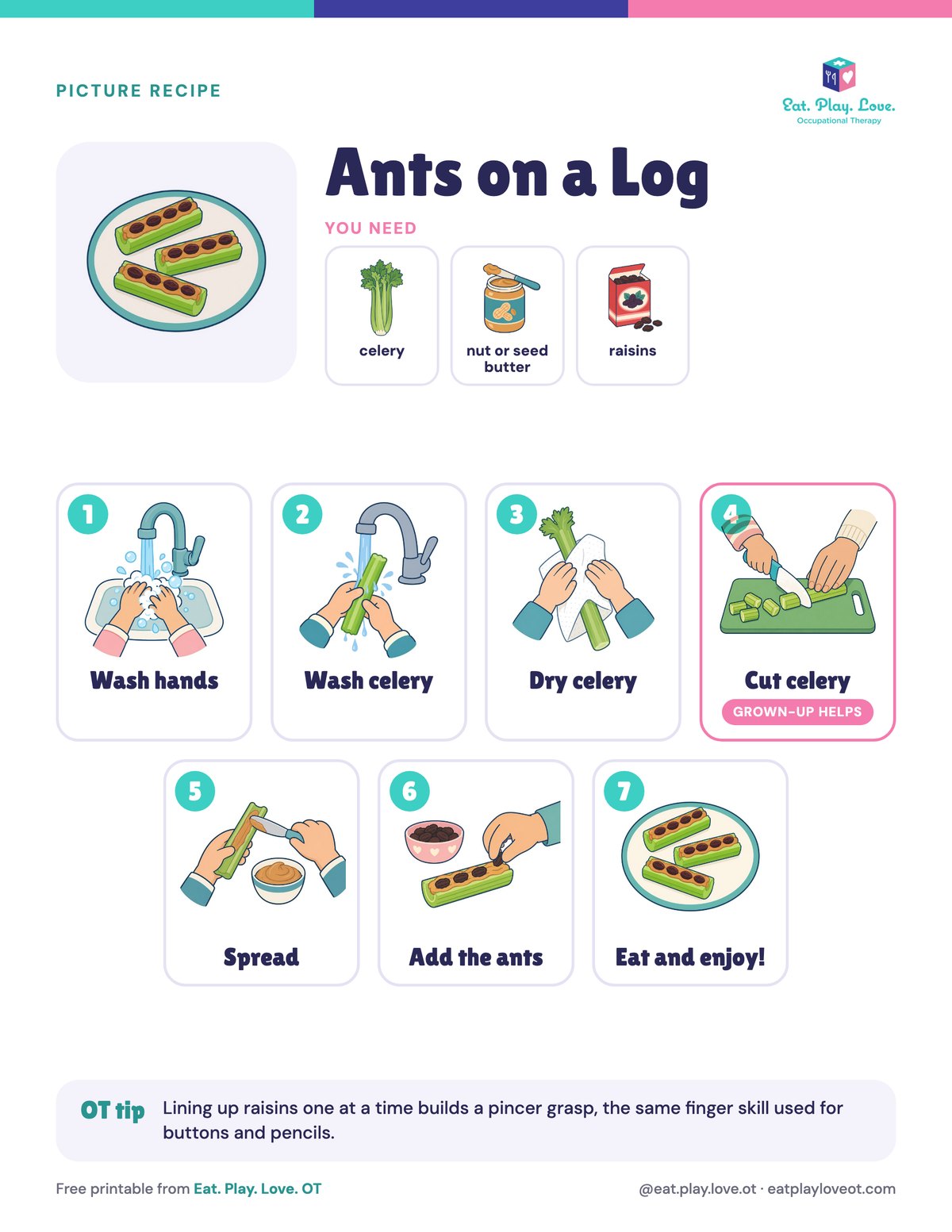
Ants on a Log picture recipe card for kids from Eat. Play. Love. Occupational Therapy

Ants on a Log Picture Recipe

A step-by-step picture card so your child can make their own snack, with less talking and more "I did it!"

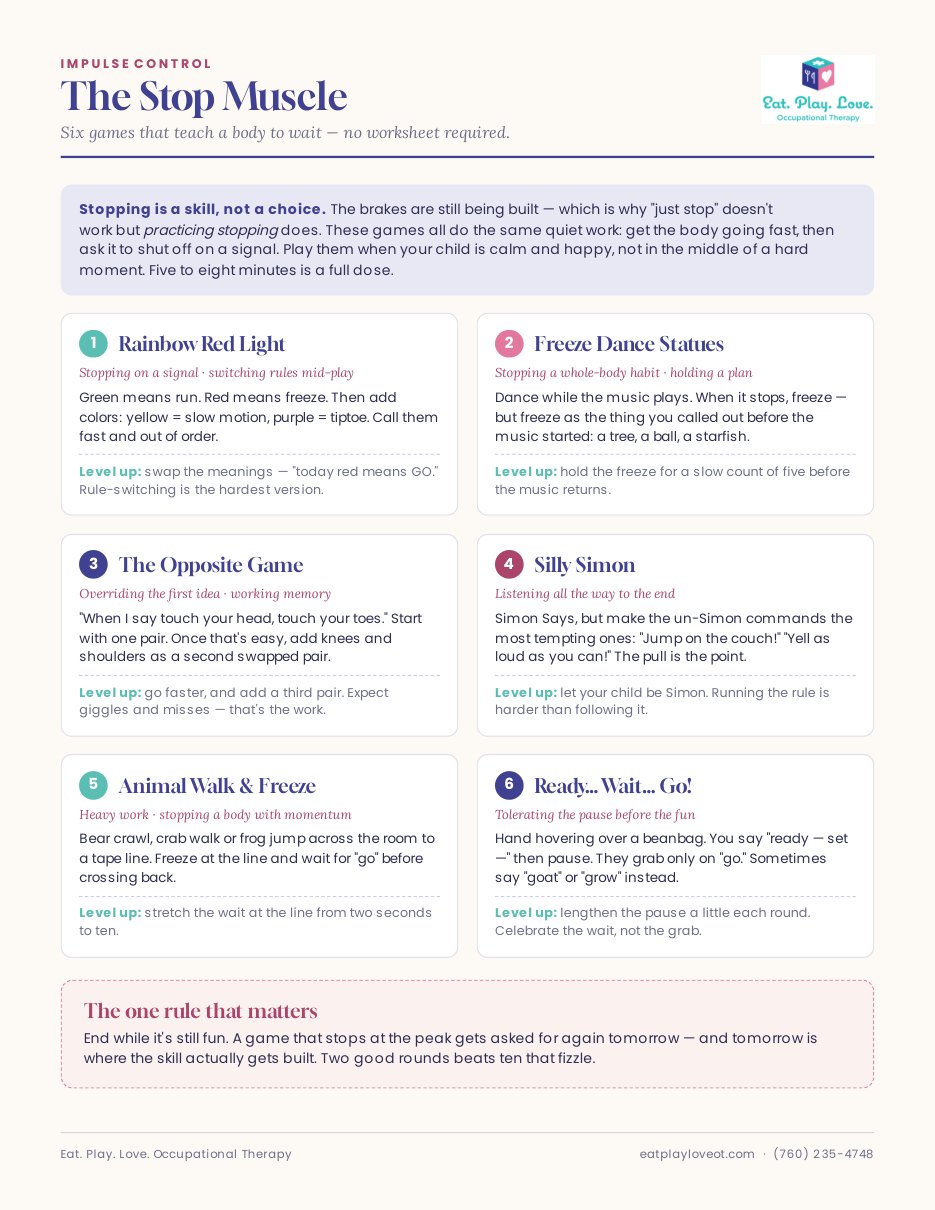
The Stop Muscle printable — six impulse control games for kids from Eat. Play. Love. Occupational Therapy

The Stop Muscle

Six no-prep games that teach a body to wait — plus the words to use while you play.

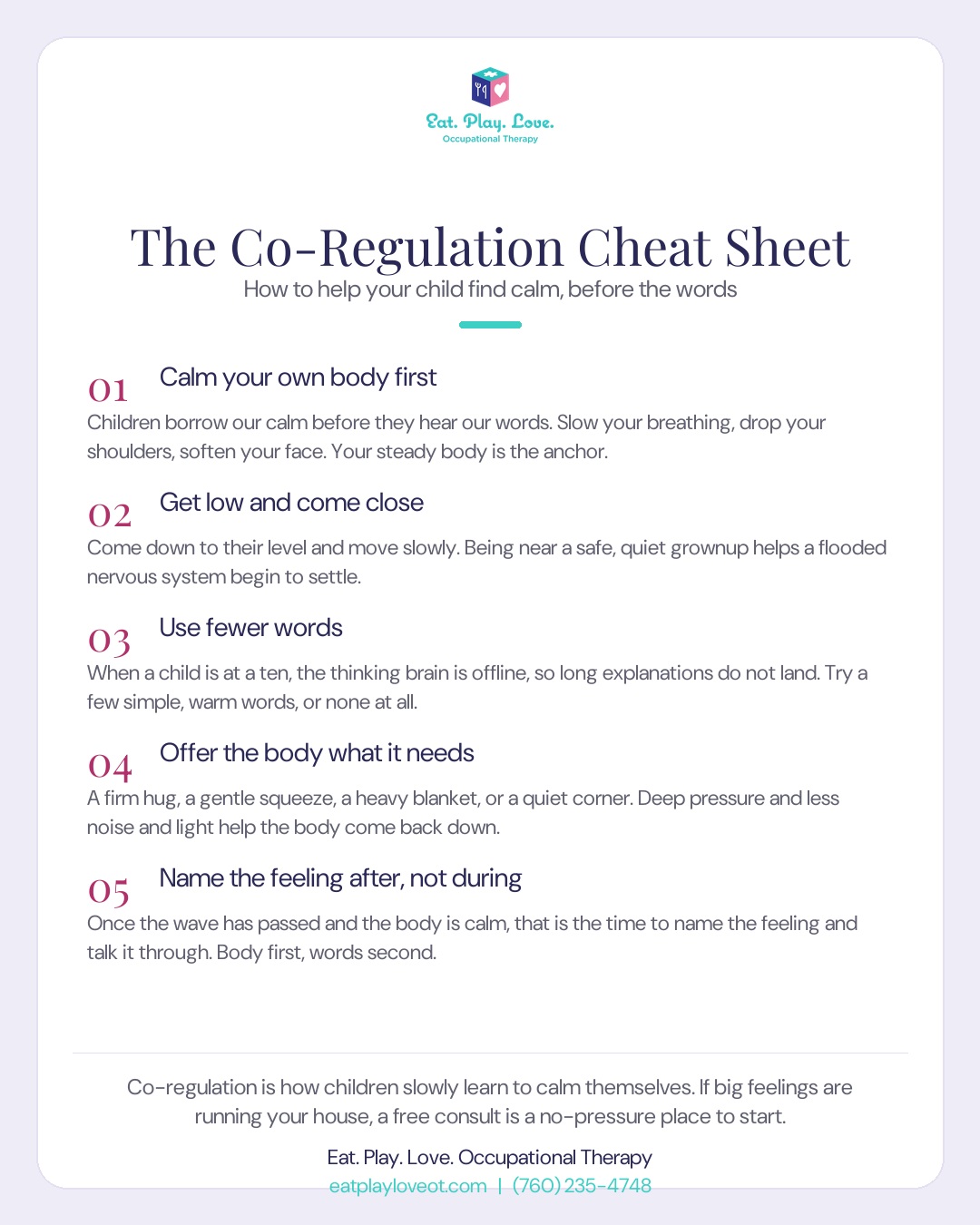
The Co-Regulation Cheat Sheet from Eat. Play. Love. Pediatric Therapy

The Co-Regulation Cheat Sheet

How to help your child find calm, before the words — the five steps we coach parents through in session.

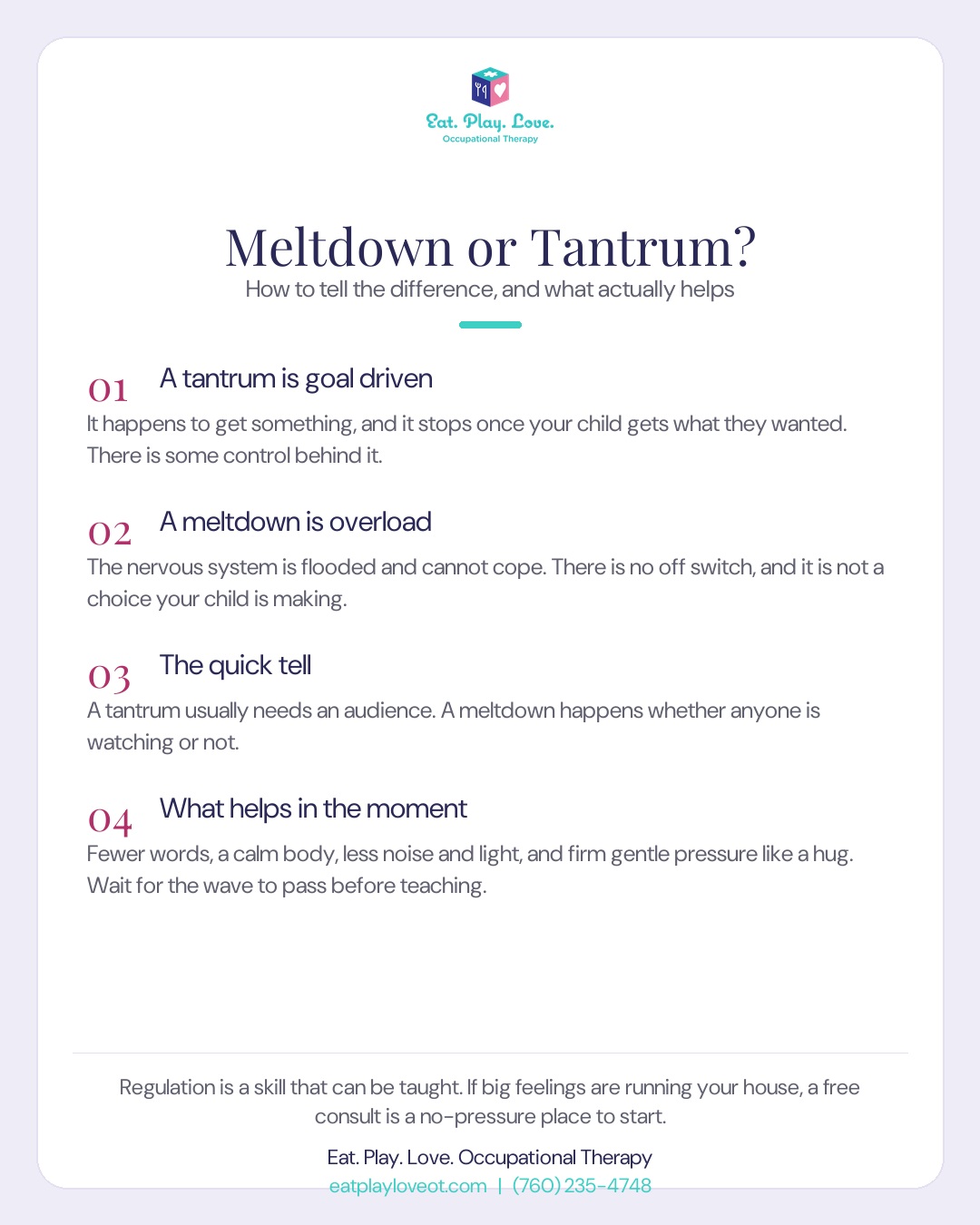
Meltdown or Tantrum? printable guide from Eat. Play. Love. Pediatric Therapy

Meltdown or Tantrum?

How to tell the difference in the moment — and why what helps one makes the other worse.

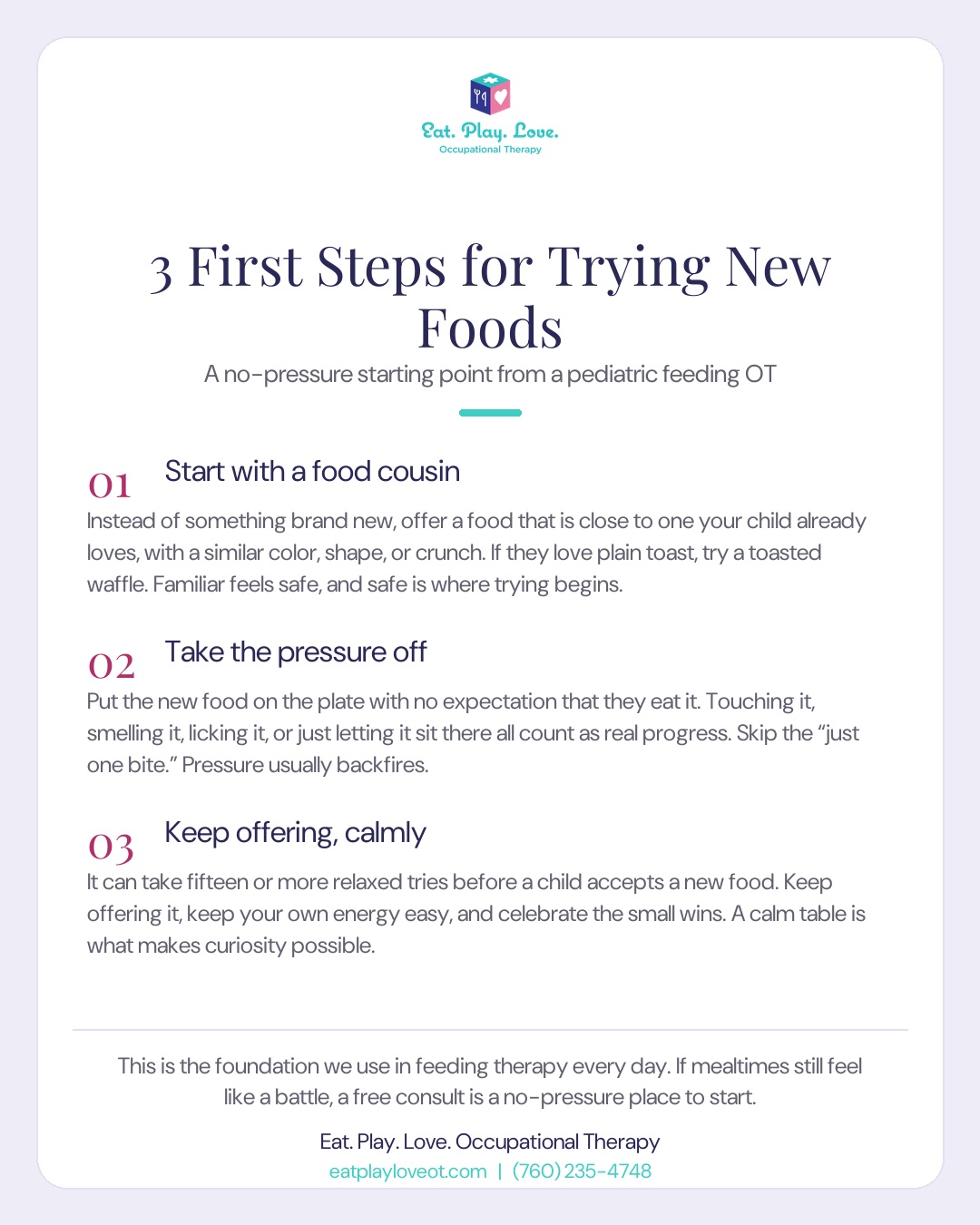
3 First Steps for Trying New Foods from Eat. Play. Love. Pediatric Therapy

3 First Steps for Trying New Foods

A no-pressure starting point from a pediatric feeding OT — the foundation we use in feeding therapy every day.

Text usGet Started