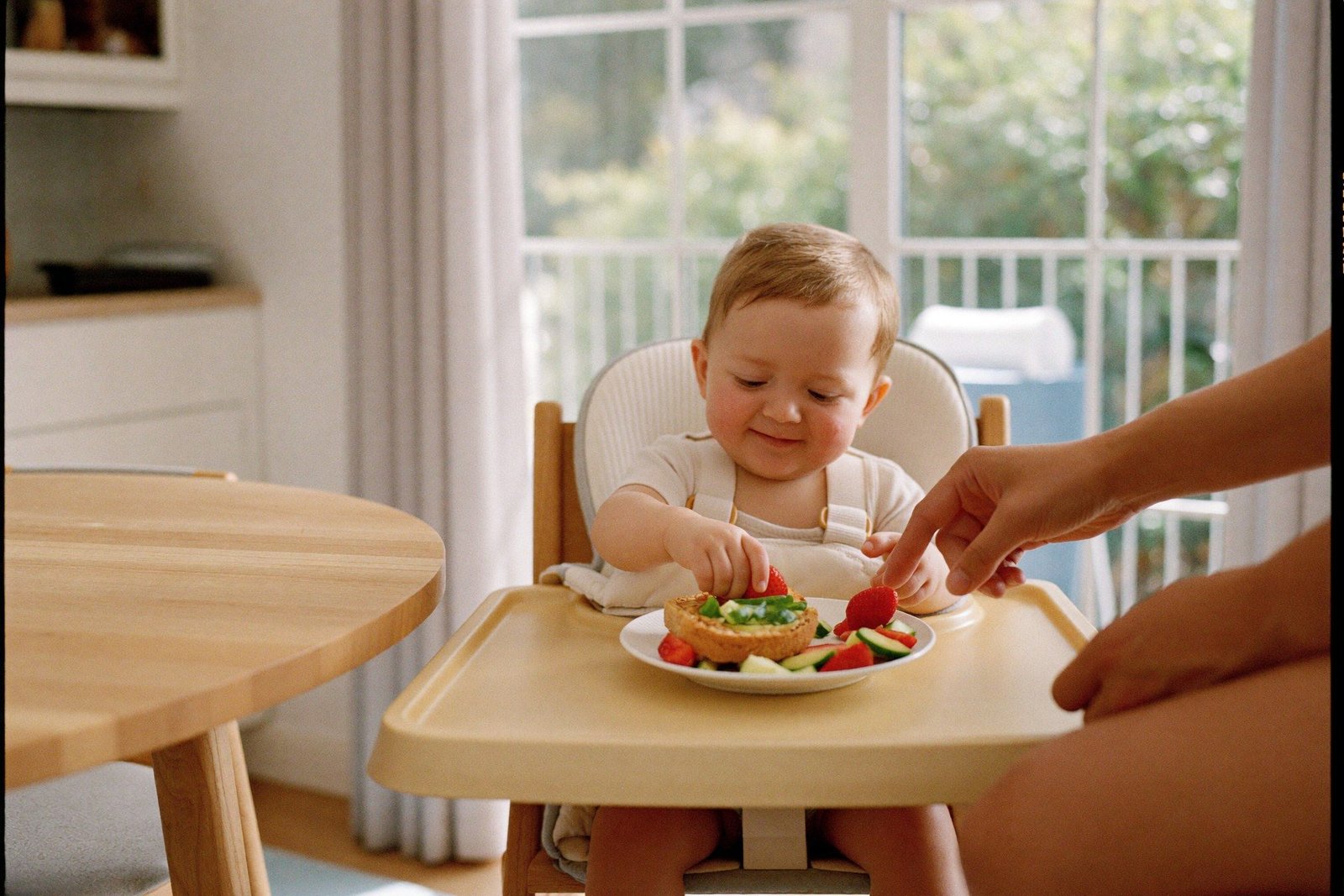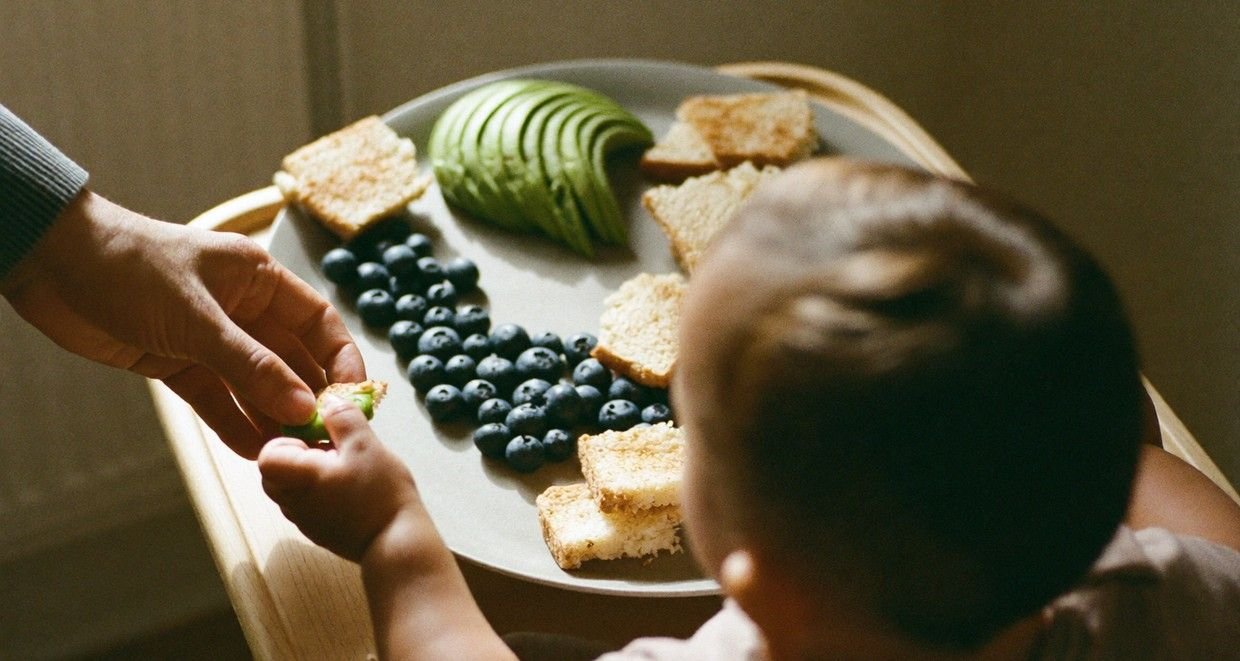
You made the dinner. You made it early, because everyone falls apart after 5:30. You even made the one thing they liked last Tuesday.
And they look at the plate and say, "I don't want that."
Something in your chest tightens. You hear yourself say "just three bites" in a voice you don't love. Someone slides out of their chair. Someone else is crying. Your partner says something well-meaning that lands sideways. Twenty minutes later you're scraping an untouched plate into the trash and wondering why the hardest part of your entire day is a meal you cooked with love.
If dinner has become the worst half hour in your house, you are not doing this wrong. Mealtimes are genuinely one of the most demanding things we ask young children to do — and almost nobody tells parents that.
Eating Is the Hardest Thing Your Child Does All Day
We tend to think of eating as simple. It isn't.
Eating is the only childhood activity that requires all eight sensory systems to work together at the same time. Your child has to tolerate how the food looks, smells, sounds, feels in their hands and in their mouth, and tastes. They have to sit upright against gravity with enough core stability to free up their jaw and tongue. They have to coordinate more than two dozen muscles to chew and swallow safely. And they have to do all of that while regulating their emotions, following social rules, and holding a conversation.
Adults do this on autopilot. A three-year-old is running every one of those systems manually.
So when a child refuses a food, it's rarely about the food. It's usually about one of those systems saying this is too much right now.
The Real Reasons Dinner Falls Apart
They're dysregulated before they sit down. Most meals land at the two hardest moments of the day — right after school pickup, or at the very end of it. A nervous system that's already maxed out doesn't have much left for a new texture. Bodies that feel unsafe don't eat well; that's physiology, not attitude.
The food is genuinely overwhelming. For a sensitive child, a mixed casserole isn't one food — it's eleven unknowns touching each other. Sauce feels different every bite. Ground meat changes texture as you chew. What looks like stubbornness is often a reasonable response to unpredictability.
Their body isn't set up to eat. Feet dangling, sliding down the chair, twisting sideways. If a child is using their core just to stay upright, there's less available for the fine coordination of chewing and swallowing. Feet supported on a stool or a box changes more meals than parents expect.
They're not actually hungry. Constant grazing, milk before dinner, or an afternoon snack at 4:45 will flatten anyone's appetite. Hunger is a skill kids need the chance to feel.
The pressure itself is backfiring. Here's the hardest one. Every "just one bite," every hovering, every bargain raises the stakes at the table. Research on childhood feeding is remarkably consistent here: pressure reliably reduces how much and how widely kids eat. The more we push, the more the table feels like a place where things happen to them.
None of that means you've been doing it wrong. It means you've been doing what every instinct and every worried grandparent told you to do.
What Actually Helps
1. Split the job. You decide what is served, when, and where. Your child decides whether and how much. That's it. This division — sometimes called the division of responsibility — is the single biggest lever most families have, and it works because it hands your child back the one piece they were fighting you for.
2. Always include a safe food. Put one thing on the table you know they'll eat, alongside everything else. Not a separate meal — just one reliable item in the lineup. Safe foods aren't giving up; they're what makes a child brave enough to look at the rest.
3. Let them interact before they eat. Touching, smelling, stirring, poking, licking, putting it back down — every one of those is real progress. Most kids need somewhere between 10 and 20 low-pressure exposures to a new food before they'll try it. Getting it on the plate counts. Getting it on the fork counts.
4. Support the body. Feet flat on something solid. Hips and knees around 90 degrees. Table at about elbow height. If your child's chair leaves their legs swinging, a small stool or an upside-down box under their feet costs nothing and often settles the whole meal.
5. Shorten it and calm it. Fifteen to twenty minutes is plenty for a young child. Screens off, background quiet, lights not too bright. Talk about anything other than the food — the dog, the day, the ridiculous thing that happened at recess.
6. Get your own nervous system settled first. Kids co-regulate off us. If you sit down braced for a battle, they'll feel it before anyone picks up a fork. One slow breath before you call everyone to the table is a legitimate feeding strategy.
Not sure where to start with your child specifically? Our feeding therapy team can help — in your home or over telehealth, throughout San Diego County.
When It's More Than Picky Eating
Most picky eating is a normal, if exhausting, developmental phase. But some patterns point to something worth evaluating:
- Eats fewer than about 20 foods total, and the list keeps shrinking
- Drops foods entirely and doesn't add them back
- Refuses whole categories — all proteins, all vegetables, everything crunchy
- Gags, retches, or vomits at the sight, smell, or touch of certain foods
- Coughing, choking, or wet-sounding breathing during or after meals
- Still can't manage age-appropriate textures
- Mealtimes are a daily fight for months on end
- Weight or growth has stalled, or your pediatrician has flagged it
- Extreme distress when new foods appear on the table
That last cluster — especially significant distress, shrinking variety, and nutritional impact — is what clinicians look at when considering ARFID (Avoidant/Restrictive Food Intake Disorder), which is different from ordinary picky eating and responds well to the right support.
If several of these sound like your house, that's worth a conversation. Not because something is wrong with your child, but because you shouldn't have to white-knuckle dinner every night for another year.
You Are Not Failing at This
This deserves saying plainly: the fact that mealtimes are hard is not evidence that you are doing a bad job.
You are managing a sensory-motor-emotional task that would challenge most adults, at the worst hour of the day, usually while tired, often while someone else also needs something. And you're doing it with almost no useful information, because most feeding advice that gets passed around — clean plates, no dessert until, they'll eat when they're hungry enough — is decades out of date and makes things worse.
Nearly every family we work with arrives believing they're the only one whose dinner looks like this. They're not. Not by a long way.
How Feeding Therapy Actually Works
Feeding therapy is not force-feeding, and it isn't a chart of bites. A feeding therapist figures out why eating is hard for your specific child — sensory sensitivity, oral motor skills, postural stability, regulation, medical factors, or some combination — and then builds skills in a way that feels safe enough for a child to be curious.
Sessions look like play. Food exploration, messy games, silly challenges, cooking together. We also coach you, because the real work happens at your table, not ours. And we start where your child actually is, not where a chart says they should be.
Most families tell us the first thing that changes isn't the food list. It's the feeling in the room.
If dinner has become the hardest part of your day, let's talk. Book a free consultation with Eat. Play. Love. OT — we'll listen to what mealtimes look like in your house and help you find one thing to try this week. No pressure, no diagnosis required.
We are in-network with United Healthcare, Optum, Tricare West, and Cigna/ASH.
We are a contracted provider with SDRC Early Start (vendor HQ2449) and Inland Regional Center (vendor PJ6193).
Based in Vista and serving Oceanside, Carlsbad, San Marcos, Encinitas, Temecula, and surrounding San Diego County, with in-home and telehealth visits available.