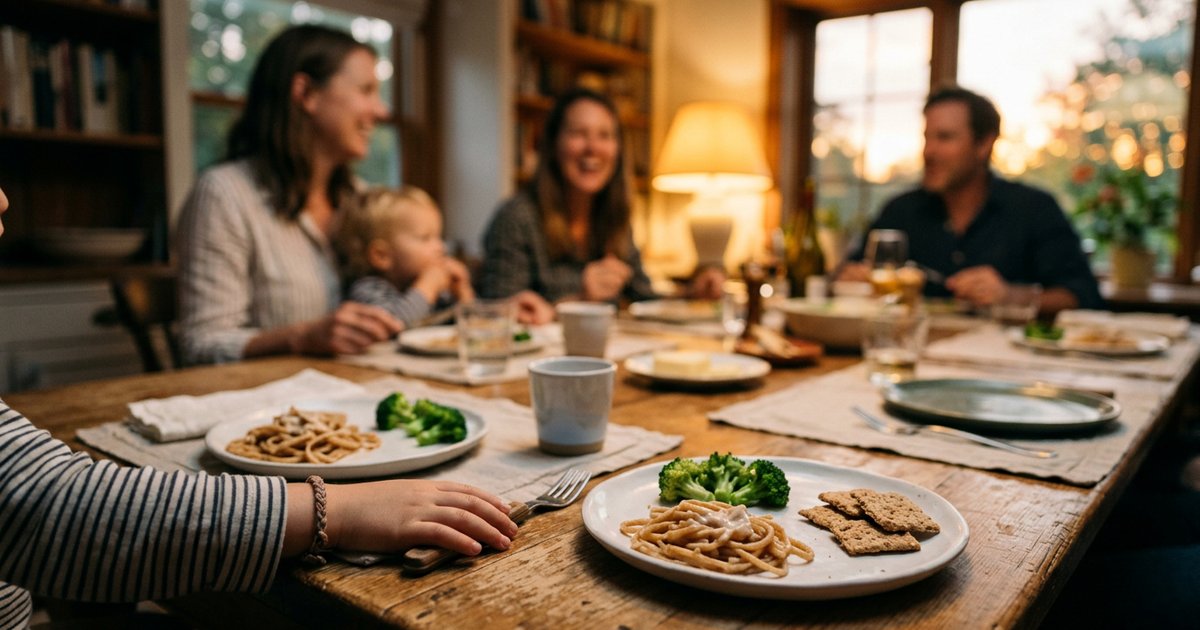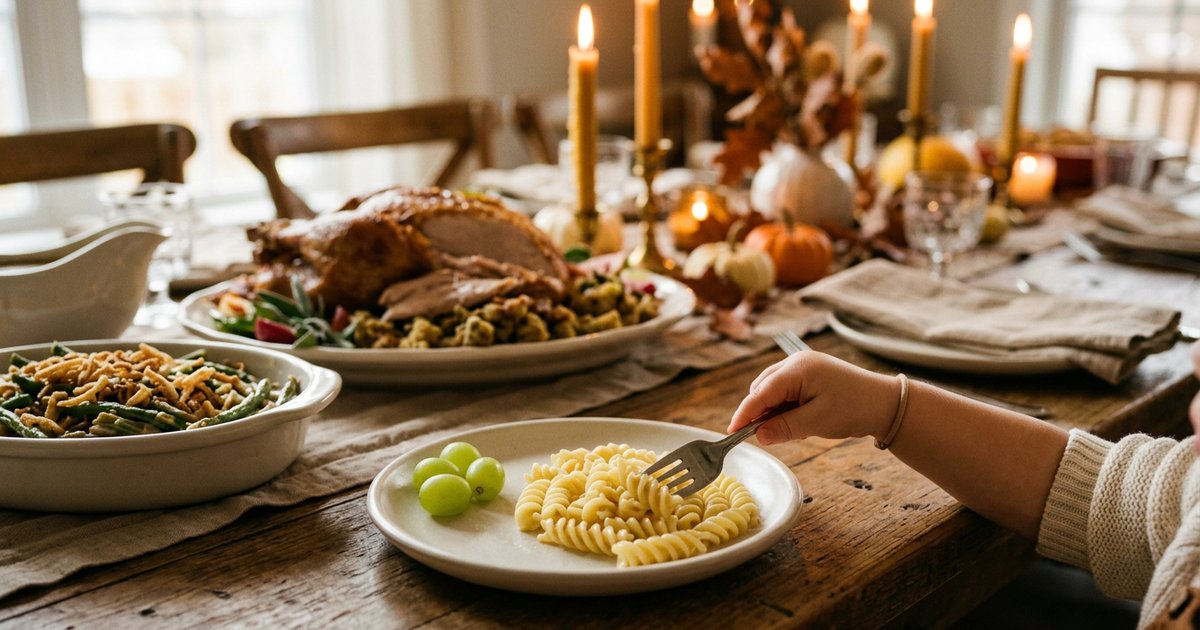
The turkey is resting. The table is set. Grandma is hovering near your child's plate with a spoonful of green bean casserole, and the whole room has gone quiet.
You can feel it coming. The "just one bite." The comment from your uncle about how he was never allowed to leave the table. Your child's shoulders creeping up toward their ears.
You smile, you redirect, and inside you're already running the math: how many people are watching, how many bites they've eaten, how soon you can leave.
If that scene made your stomach drop a little, you are in very good company. The holidays are one of the hardest times of year for families of picky eaters, and almost nobody talks about it honestly.
Why Holiday Meals Are Extra Hard
A regular Tuesday dinner is already a big sensory task for a young child. Thanksgiving turns it up several notches:
- Unfamiliar foods. Everything looks, smells, and feels different from what's at home.
- A different setting. New house, new chairs, new noises, new people.
- Off-schedule hunger. Meals land at odd times, and snacks get skipped or eaten too close to dinner.
- More eyes on the plate. Relatives mean well, but an audience raises the pressure fast.
- Big, busy bodies. Loud rooms and long waits are tiring for little nervous systems.
When a child is working this hard just to stay regulated, the food is often the first thing to go. That's not defiance. That's a child doing their best in a very full environment.
7 Gentle Ways to Get Through the Holiday Table
- Feed them before you go. Offer a normal meal or filling snack an hour or two beforehand. A child who isn't starving is more flexible, and you aren't relying on the one meal you can't control.
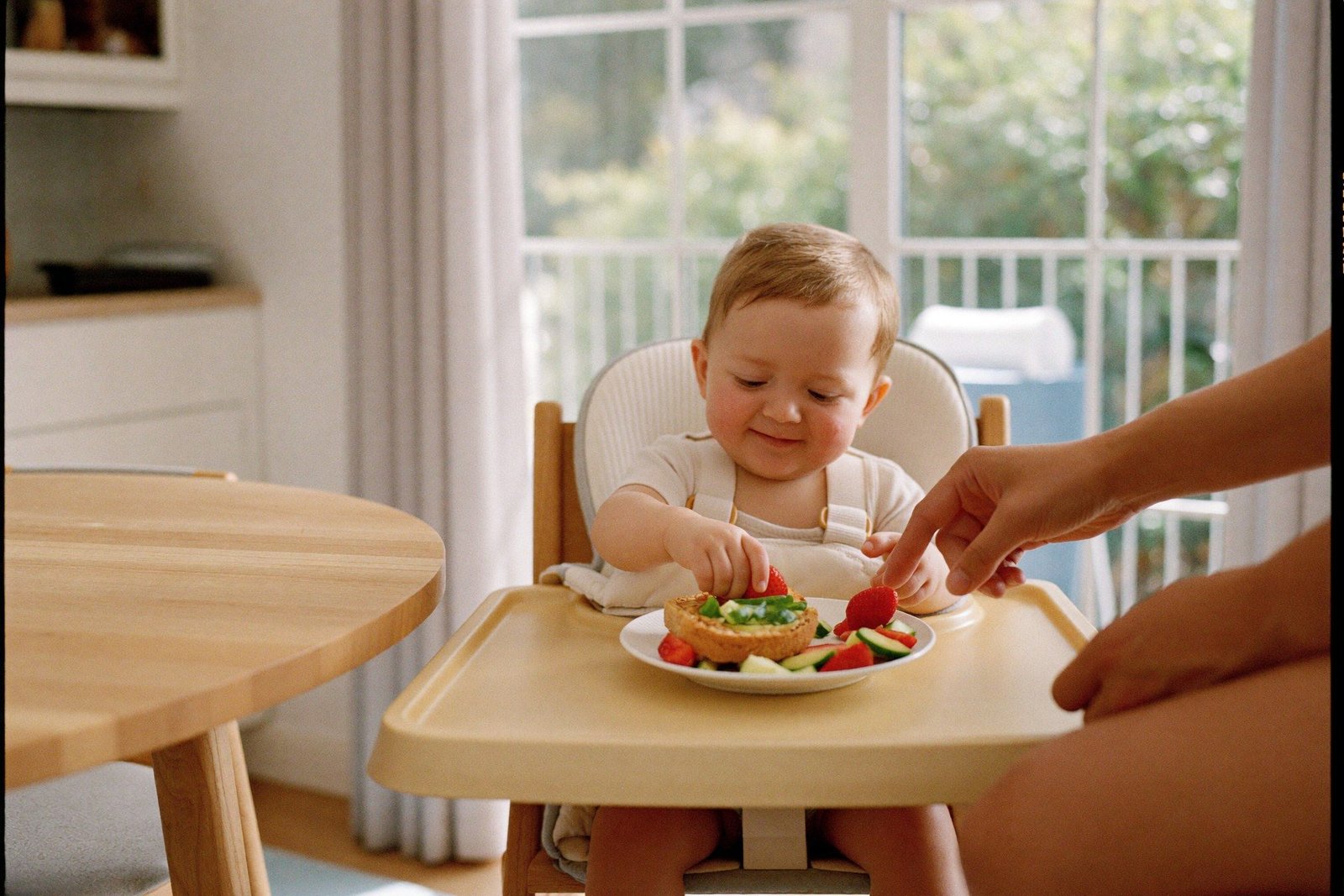
- Bring a safe food (or two). Pack something you know they'll eat, like a favorite pasta, crackers, or fruit. Put it on the table next to everything else, not hidden in a bag. Safe foods aren't giving up. They're what makes a child feel secure enough to look at the rest.
- Let them see before they serve. Walk the buffet together before anyone sits down. Name what you see, let them choose what goes on their plate, and let them skip what doesn't. Small portions are fine, and so is an empty spot on the plate.
- Skip the bite-counting. No "just one bite," no bargaining for dessert. Pressure, even soft pressure, tends to shrink what kids will eat over time. Instead, quietly put a new food within reach and let it be there. Looking, smelling, and poking all count as progress.
- Set your child's body up to succeed. If the seat is too big, a rolled towel behind their back and a stool or phone book under their feet can make chewing easier. Feet supported means a calmer, more capable eater.
- Plan a break. Step outside for a few minutes, take a lap around the block, or find a quiet room. A little movement and a chance to reset can save the rest of the meal.
- Have a one-line script ready for relatives. Something friendly and firm works best:
"We're letting [name] listen to their body at the table today. Thanks for helping us keep it relaxed!"
Then change the subject. You don't owe anyone a full explanation, and you're allowed to protect your child's mealtime.
Want more support making mealtimes calmer all year long? Learn more about our feeding therapy in San Diego County, in-home or over telehealth.
You're Not Failing (Even If It Feels Like It)
Here's the thing no one says out loud at the holiday table: the fact that your child isn't eating the stuffing is not a report card on your parenting.
You're navigating a hard sensory environment, a crowd of opinions, and your own tired nervous system, all while trying to enjoy a holiday. A plate of buttered noodles and three grapes at Thanksgiving is a perfectly fine meal. Connection at the table matters far more than what's on the fork.
Many of the families we work with tell us they dread the holidays for exactly this reason. You are not the only one counting the minutes until pie.
When It's More Than a Holiday Challenge
Occasional pickiness is normal, especially in toddlers and preschoolers. But it may be worth a conversation with a feeding therapist if you notice:
- Your child eats a very small number of foods (around 20 or fewer), and the list is getting shorter
- They gag, retch, or become very distressed around certain foods, smells, or textures
- Whole food groups have disappeared
- Mealtimes are a daily battle, not just a holiday one
- Your pediatrician has raised concerns about weight or growth
- You find yourself avoiding gatherings, restaurants, or school events because of food
None of this means something is "wrong." It means your child may need a different kind of support, and that support is available.
What Feeding Therapy Looks Like
Feeding therapy at Eat. Play. Love. OT is play-based, gentle, and never forced. We work out why eating is hard for your child, whether it's sensory sensitivities, oral motor skills, posture, regulation, or a mix, and build skills at a pace that feels safe. We coach you along the way, because the real change happens at your own table.
Sessions happen in your home or over telehealth, which means no extra car rides and no unfamiliar clinic on top of an already hard day.
Let's Make Next Year's Table Easier
If this Thanksgiving feels like too much to face on your own, you don't have to. Book a free consultation with our team. We'll listen to what mealtimes look like in your house and help you find one small thing to try this week. No pressure, no diagnosis required.
From our table to yours, we're wishing you a calm, connected, and low-pressure holiday.
We are in-network with United Healthcare, Optum, Tricare West, and Cigna/ASH.
We are a contracted provider with SDRC Early Start (vendor HQ2449) and Inland Regional Center (vendor PJ6193).
Based in Vista and serving Oceanside, Carlsbad, San Marcos, Encinitas, Temecula, and surrounding San Diego County, with in-home and telehealth visits available.