What Actually Happens at a Pediatric Feeding Evaluation?
By Lindsey Wood, MOT, OTR/L
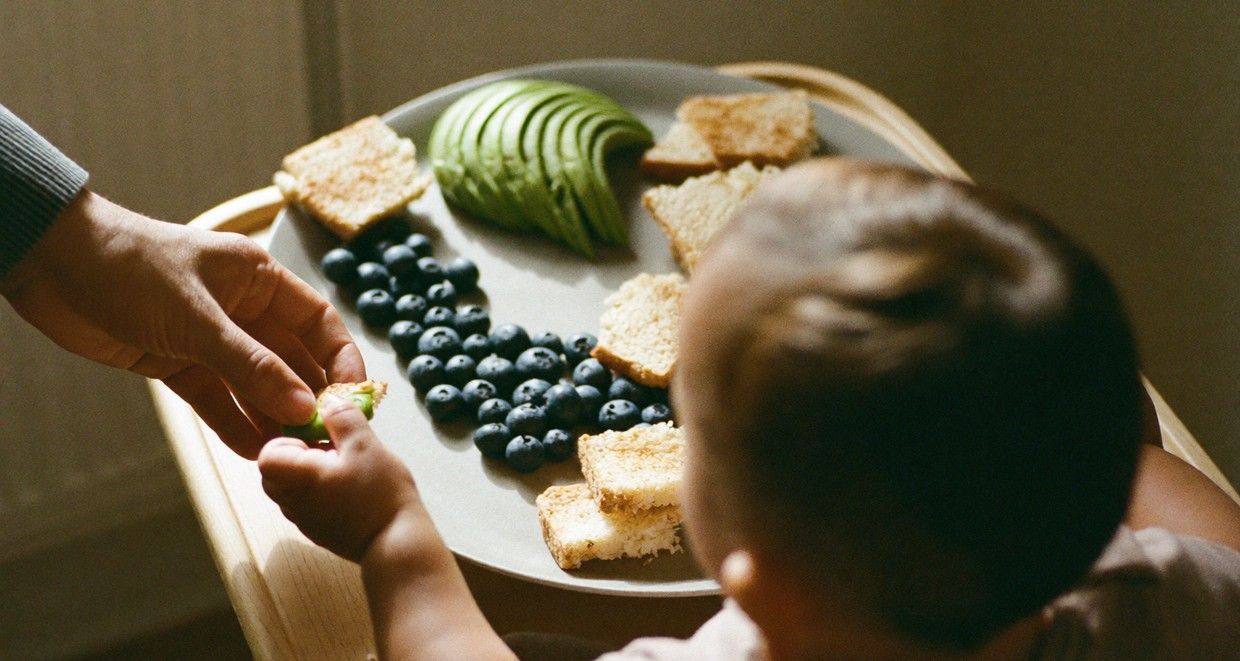
If you have been on the fence about a feeding evaluation for your child, there is a good chance the hesitation is not about the appointment itself. It is about the unknown. Will someone force my kid to eat? Will they judge my parenting? Will my child melt down the whole time?
As a pediatric feeding therapist in San Diego, I want to pull back the curtain, because the reality is much gentler than most families expect. Here is exactly what happens.
Before the evaluation
We start with your story. Before we ever meet your child, we want to know what mealtimes actually look like at your house. Which foods feel safe, which ones disappeared, what a hard night looks like, and what you have already tried. You are the expert on your child, and this history shapes everything.
If your child has a medical history, reflux, allergies, prematurity, or a tongue tie, we gather that too. Feeding sits at the intersection of so many systems, and the full picture matters.
During the evaluation
First, it looks like play, because it is. We build comfort before we ever bring food into the mix. A child who feels safe shows us their real skills. A child who feels tested shows us their defenses.
Then we watch a real mealtime moment. We bring familiar foods, you bring a couple of their favorites, and we observe how your child explores, chews, swallows, and responds to different textures. We are watching oral motor skills, sensory responses, posture, and the emotional temperature of the meal.
There is no force-feeding. Ever. We never pressure a child to take a bite, and we will never ask you to hold them down or trick them. Pressure is the fastest way to shrink a food list, and everything we do is built on trust.
We also look beyond the plate. Feeding challenges are almost never just about food. Sensory processing, motor coordination, and regulation all play a role, so we screen the whole child, not just the mouth.
After the evaluation
You get real answers, in plain language. Is this typical picky eating that will resolve with a few adjustments at home? Or is this a feeding difference that deserves support? Either answer brings relief, because either way, you finally know.
If therapy makes sense, we build a plan around your real life. In-home or virtual sessions, strategies that fit your actual kitchen and your actual schedule, and coaching so you feel confident between visits. Progress happens at your table, not just in our sessions.
How to prepare (it's easy)
Feed your child normally that day. Bring one or two safe foods and, if you like, one food you wish they would eat. Tell your child a friend is coming to play, because honestly, that is what it will feel like to them.
When to stop waiting
If your child eats fewer than about 20 foods, gags or panics at new textures, drops foods without replacing them, or mealtimes are a daily source of stress, it is worth a conversation. Feeding skills are learnable, and earlier support is easier support, for your child and for you.
We offer pediatric feeding therapy across San Diego County, in-home and virtual, in-network with UnitedHealthcare, Optum, TriCare West, and Cigna/ASH. A free consult is a no-pressure place to start, and you are first in line the moment a spot opens.
You do not need to wait for it to feel like an emergency. Curiosity is reason enough. 💛