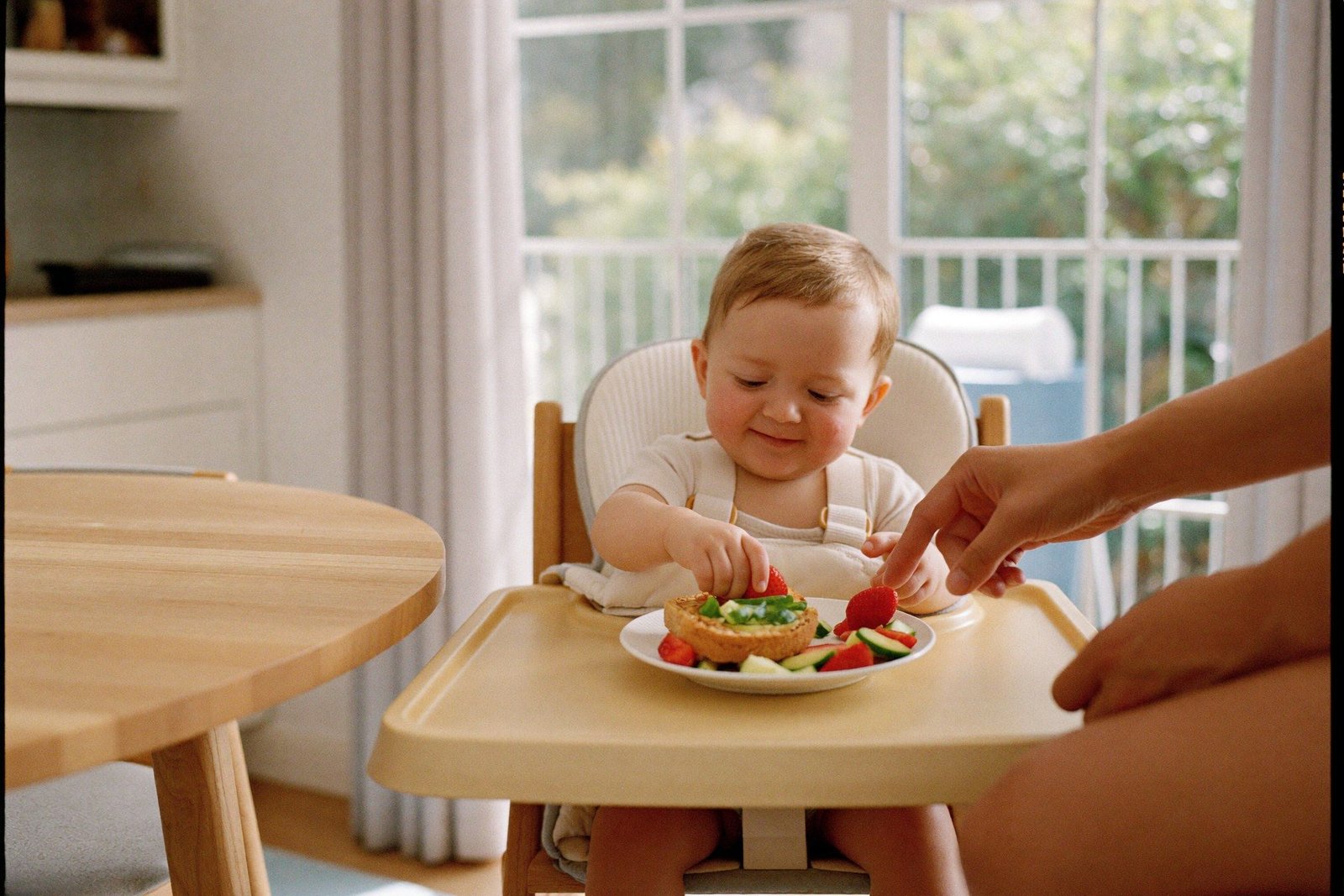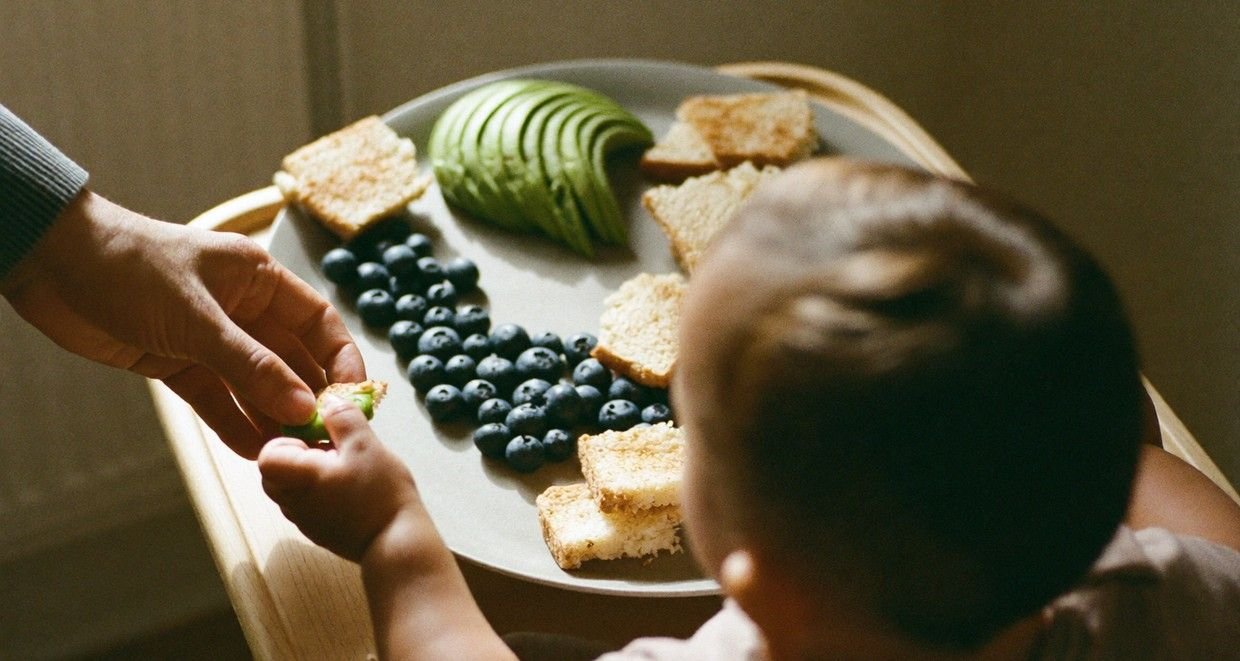
It's 5:45. You've made the chicken nuggets (the right brand, the dinosaur ones), the plain pasta, and a little pile of cucumbers, because hope springs eternal.
Your child eats four bites of pasta, licks the salt off a nugget, and asks for a pouch.
Somewhere in the back of your mind, a question you've been quietly carrying gets a little louder: Is this just a picky phase? Or is something else going on?
If you've been wondering that, you're not overreacting, and you're definitely not alone. It's one of the questions I hear most from families across North County and San Diego. So let's look at it honestly, with what we actually know about why young children refuse food.
Picky Eating Is Real, and Usually Normal
First, the reassuring part. Picky eating is one of the most common things parents of young children deal with. Wariness of new foods (researchers call it food neophobia) tends to show up in toddlerhood and often peaks somewhere between ages 2 and 6.
There's a good reason for that. Right around the time toddlers start walking off on their own and putting everything in sight into their mouths, a little built-in caution kicks in. "If I don't know it, I don't eat it" is a pretty sensible rule for a small human exploring a big world.
So a child who loves crackers, side-eyes broccoli, and only eats yogurt from one specific spoon? Very likely developing right on track.
Beyond Picky: Food Refusal Is Communication
Here's the reframe I share with parents (and the one I talk about when I speak to early childhood educators): food refusal is almost never about being difficult. It's information.
When a child says no to a food, their body and brain are often telling us something. In 2019, a group of feeding experts published a shared definition of Pediatric Feeding Disorder that looks at four areas that can make eating hard. They're a helpful lens even for everyday picky eating:
1. Medical
Reflux, constipation, food allergies, frequent ear infections, enlarged tonsils, or a history of prematurity can all make eating uncomfortable. If eating has ever hurt, a child's "no" makes a lot of sense.
2. Feeding skills
Chewing, moving food around with the tongue, and swallowing are motor skills. Some kids need more practice moving from purees to crunchy, chewy, and mixed textures. A child who "only eats soft foods" may really be saying, "I don't know how to manage the hard ones yet."
3. Nutrition
When a child's food list gets very narrow, nutrition, energy, and growth can be affected. This is where your pediatrician and sometimes a dietitian come in.
4. Sensory and emotional experience
Some children notice smell, texture, temperature, and how food looks much more intensely than others. Add a dysregulated nervous system at the end of a long day, plus any pressure at the table, and eating can feel genuinely unsafe.
Most kids have a little bit of one of these. Kids who need feeding support usually have a few stacked together.
Picky Eater or Problem Feeder? How to Tell the Difference
There's no single test, but feeding therapists look at patterns. Here's a simple side-by-side many families find helpful:
More typical picky eating often looks like:
- Eats a fair variety, often 30 or more foods across most food groups
- Gets "burned out" on a favorite food but adds it back after a break
- Can tolerate a new food on the plate, even if they don't eat it
- Eventually touches or tastes new foods after many calm exposures
- Is growing well and has energy to play
It may be more than picky when your child:
- Eats about 20 foods or fewer, and the list is getting shorter
- Drops foods and never adds them back
- Refuses whole textures or food groups (all meats, all crunchy foods, anything "mixed")
- Gags, vomits, cries, or panics when a new food comes near
- Takes a very long time to eat, or coughs and chokes often
- Has growth or weight concerns your pediatrician has mentioned
- Needs a separate meal at nearly every sitting
- Is turning mealtimes into the most stressful part of your family's day
If a few of those in the second list made you nod, that doesn't mean something is "wrong" with your child. It means they may need a different kind of support, and that support works best when it starts earlier.
Some children who have very narrow eating driven by sensory sensitivity, fear of choking or vomiting, or low interest in food are evaluated for ARFID (Avoidant/Restrictive Food Intake Disorder). That's a diagnosis made by a medical or mental health professional, not something to self-diagnose from a blog post. But knowing the term can help you ask better questions at your next pediatrician visit.
Why "Just Wait It Out" Isn't Always the Answer
You may have been told, "They'll eat when they're hungry enough." For many typical picky eaters, appetite and time really do help.
But for a child whose eating is limited by sensory, motor, or medical factors, hunger doesn't fix the underlying challenge. And well-meaning pressure ("two more bites," "no dessert until...") tends to backfire, raising stress and shrinking the food list further. I wrote a whole post on why "just one bite" backfires if you want to go deeper on that one.
What You Can Try at Home This Week
Whatever's behind your child's eating, these gentle shifts help almost every family:
- Always include one safe food. Put a food you know they'll eat on the table with everything else. Safe foods are what make a child brave enough to look at the rest.
- Count "food play" as progress. Smelling, touching, licking, and helping cook all count. Many children need around 8 to 15 calm exposures, sometimes more, before tasting a new food.
- Set up their body to eat. Feet supported on a stool or box, hips and knees bent, table near elbow height. A stable body frees up the mouth.
- Keep meals short and predictable. About 15 to 30 minutes, at regular times, with space between snacks so hunger can show up.
- Lower the temperature at the table. Talk about the day, not the food. A calm, connected meal is a successful meal, even if the new food went untouched.
What Feeding Therapy Actually Looks Like
If you're picturing a therapist coaxing bites with a spoon, let's clear that up. Good feeding therapy is play-based, child-led, and never forced.
At Eat. Play. Love. OT, our feeding therapists start by figuring out why eating is hard for your child: sensory, oral motor, posture, regulation, medical history, or a mix. From there, we build skills step by step, at a pace your child's nervous system can handle. That might mean messy food play, "food chaining" from a trusted food to a close cousin, strengthening chewing skills, or working on regulation before food ever comes out.
We also coach you, because the real change happens at your table, not ours. Curious what the first visit is like? Here's a walkthrough of what actually happens at a pediatric feeding evaluation.
We see families in their homes and over telehealth across North County and greater San Diego County, from Vista, Oceanside, and Carlsbad to San Marcos, Encinitas, and Temecula. That means no extra car ride or unfamiliar clinic on top of an already hard dinner hour. Learn more about our pediatric feeding therapy in San Diego.
You're Not Failing at This
If you've been carrying guilt about what your child eats, please set a little of it down. Your child's eating is not a report card on your parenting. You've been doing what every instinct (and every grandparent) told you to do, with almost no clear information.
Trusting that quiet "something feels off" is exactly what good parents do. And you don't need to wait for it to feel like an emergency.
Ready to get answers? Book a free consultation. We'll listen to what mealtimes look like in your house, help you sort out picky from something more, and give you one thing to try this week. No pressure, no diagnosis required.
We are in-network with United Healthcare, Optum, Tricare West, and Cigna/ASH.
We are a contracted provider with SDRC Early Start (vendor HQ2449) and Inland Regional Center (vendor PJ6193).
Based in Vista and serving Oceanside, Carlsbad, San Marcos, Encinitas, Temecula, and surrounding San Diego County, with in-home and telehealth visits available.