What Is Emotional Regulation and How Do I Help My Child Develop It?

It's 5:40 on a Tuesday. Your child asked for the blue cup. You handed them the blue cup. And now they are on the kitchen floor, sobbing, because it is the wrong blue cup.
You know this isn't really about the cup. You also know you have about four minutes before dinner burns, and your patience ran out somewhere around three o'clock. So you try the calm voice. Then the firmer voice. Then you hear yourself say something you'll feel bad about later.
If this is your house on most days, you're not raising a difficult child and you're not a short-tempered parent. You're watching a brain-and-body skill that takes roughly two decades to build — and your child is somewhere in the early chapters.
That skill has a name: emotional regulation.
What Emotional Regulation Actually Is
Emotional regulation is the ability to notice what you're feeling, and then manage that feeling well enough to keep doing what you were doing.
Notice what it is not. It isn't being calm all the time. It isn't never getting angry. It isn't the child who sits quietly through everything — sometimes that child is holding it together so tightly that it all comes out the second they get in your car.
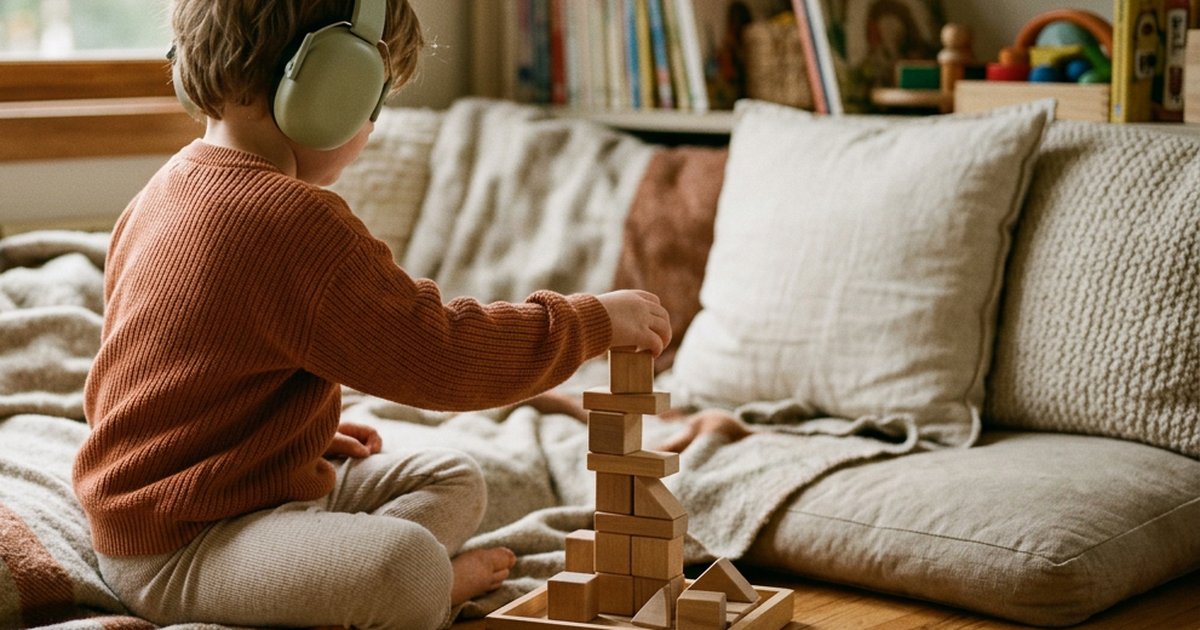
Regulation is flexibility. It's the capacity to get knocked off balance and find your way back. A regulated child still gets furious when their tower falls. They just — eventually, with help, and later on their own — recover.
And here's the part almost nobody tells parents: regulation is a body skill before it's a thinking skill. When your child is mid-meltdown, the part of the brain that does reasoning, perspective-taking, and "let's find a solution" has largely gone offline. That's not defiance. That's neurology. Talking to a dysregulated child about better choices is a little like handing someone a map while they're falling down the stairs.
Why Your Child's Big Feelings Are Normal
The brain area responsible for impulse control and emotional management — the prefrontal cortex — is one of the last to mature. It isn't fully developed until the mid-twenties.
So a four-year-old melting down over a cup is not failing at something they should have mastered. They are doing exactly what a four-year-old brain does. Same for the seven-year-old who slams a door, and the nine-year-old who dissolves over homework.
What changes with age isn't the size of the feeling. It's the number of tools available for what to do with it.
What's Usually Underneath a Meltdown
When we evaluate a child who "loses it constantly," we almost always find one of these underneath:
An empty tank. Hungry, tired, thirsty, or coming down off a long day of holding it together. The 5 p.m. collapse is famous for a reason — many kids spend all day regulating hard at school and have nothing left when they walk in your door. Some clinicians call it after-school restraint collapse. It's a sign they felt safe enough to let go with you.
Sensory overload — or sensory hunger. A grocery store is fluorescent lights, echoing announcements, cold air, and forty people. Some nervous systems take that in at full volume. Other kids are the opposite: they need far more movement and input than their day gives them, and the wiggling, crashing, and climbing is their body asking for it.
Transitions. Stopping something enjoyable to do something less enjoyable is one of the hardest executive functioning tasks there is. Most "bad behavior" in a family's day happens in the sixty seconds around a transition.
No words for it yet. A child who can't say "I'm frustrated and embarrassed that I couldn't do it" will show you instead — with a thrown marker.
Not enough practice. Regulation is learned the way any skill is learned: through thousands of repetitions with a supportive adult. That's the whole job.
Co-Regulation: The Thing That Actually Works
Before children can self-regulate, they borrow a nervous system. Yours.
This is co-regulation, and it's the foundation everything else is built on. Your child's body reads your body — your tone, your pace, your breathing, your face — and settles or escalates accordingly. Which means the single most effective regulation strategy available to you is also the least convenient one: getting yourself settled first.
In practice that looks like getting low, getting quiet, slowing down, and staying nearby. Fewer words, not more. "I'm right here" does more than a well-reasoned explanation.
It also means you cannot teach regulation while you're dysregulated yourself. If you need thirty seconds facing the sink before you turn around, take them. That's not a failure of parenting; that's the strategy working.
Wondering whether your child's big feelings are typical or worth a closer look? Our OT team can help you sort it out — in your home or over telehealth, throughout San Diego County.
Practical Things to Try This Week
Name it before you fix it. "You really wanted the other cup. That's so disappointing." Naming a feeling measurably lowers its intensity — for kids and adults both. Resist solving until after the naming.
Build a calm-down spot together. Not a time-out chair. A spot your child helps design: pillows, a blanket, a book, something to squeeze. The key word is together, and early on you go there with them.
Use heavy work daily. Pushing, pulling, carrying, climbing, and squeezing are the most reliably organizing inputs for a nervous system. Carrying the grocery bags, pushing the laundry basket, a few wall pushes, ten minutes hanging on the playground before homework. Ten to fifteen minutes can shift a whole afternoon.
Front-load transitions. A timer, a countdown, a picture schedule, or simply "two more turns, then shoes." Predictability costs you nothing and prevents a startling amount.
Teach breathing when nobody is upset. Blow a pinwheel. Blow bubbles. Smell the flower, blow out the candle. A strategy practiced only during meltdowns will never be available during one.
Debrief later, not during. Once everyone's calm — an hour later, at bedtime — you can wonder together about what happened and what might help next time. That's when the thinking brain is back online and learning is possible.
You're Not Behind
If you've been quietly comparing your child to the one in your friend's stories who "just takes a deep breath," here's what's true: regulation develops at wildly different rates, it develops unevenly, and it goes backwards during growth spurts, illness, new siblings, and the start of every school year.
Nearly every parent we work with arrives convinced they're the only one whose evenings look like this. They're not. Not remotely.
And the fact that your child falls apart with you — after holding it together all day — is not a sign you're doing it wrong. It's a sign you're the safe place.
When to Ask for Support
Consider an evaluation if you're seeing:
- Meltdowns that are frequent, very intense, or last a long time past age four or five
- Difficulty recovering — an hour or more to come back to baseline
- Regulation struggles showing up at school and home and with friends
- Big reactions to sensory input: noise, clothing tags, textures, crowds, haircuts
- Aggression or self-directed behavior during upset
- Trouble with transitions that isn't improving over months
- A gut feeling that this is harder for your child than it should be
Occupational therapy for emotional regulation looks like play, not lectures. We figure out what your child's nervous system actually needs, build a sensory and movement plan that fits your real life, and teach the concrete tools — while coaching you on the co-regulation piece, because the important work happens at your kitchen table, not in a session.
If your evenings have become something you dread, let's talk. Book a free consultation with Eat. Play. Love. OT. We'll listen to what hard moments look like in your house and help you find one thing to try this week. No pressure, no diagnosis required.
We are in-network with United Healthcare, Optum, Tricare West, and Cigna/ASH.
We are a contracted provider with SDRC Early Start (vendor HQ2449) and Inland Regional Center (vendor PJ6193).
Based in Vista and serving Oceanside, Carlsbad, San Marcos, Encinitas, Temecula, and surrounding San Diego County, with in-home and telehealth visits available.