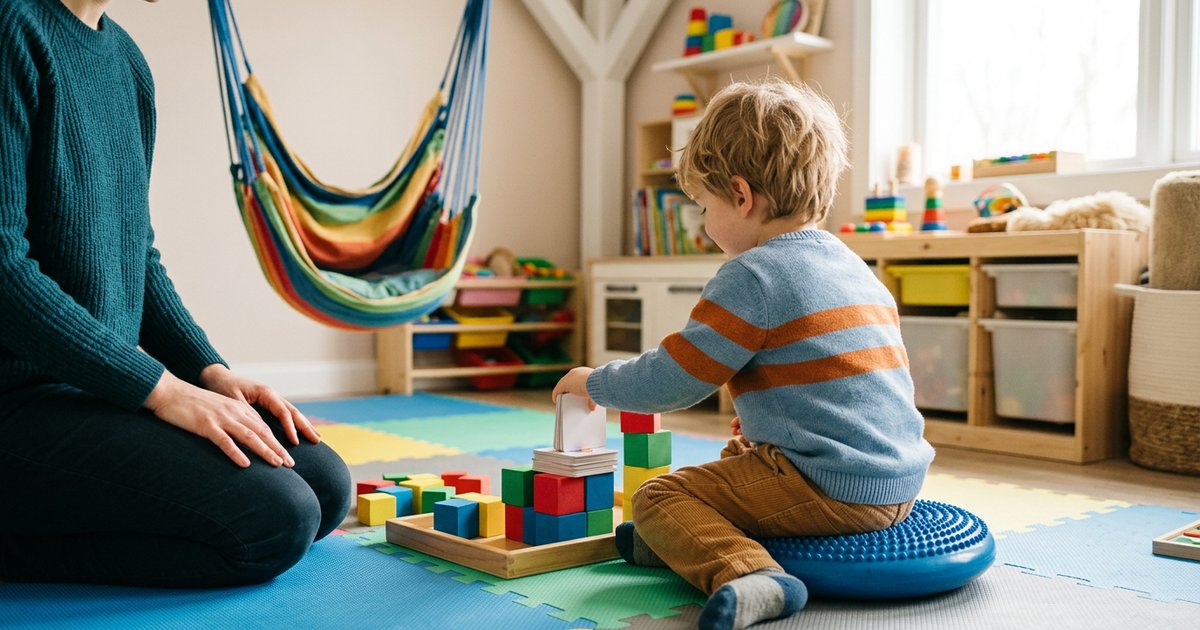
Does Telehealth Therapy Really Work for Young Kids? What San Diego Parents Should Know
It's 4:15 on a Tuesday. You've just finished the school pickup, the car smells like goldfish crackers, and you're staring at your calendar trying to figure out where a therapy appointment could possibly fit — plus the 40-minute drive each way.
Then someone suggests telehealth, and your very honest first thought is: "My three-year-old won't sit still for a video call. How is that supposed to work?"
If that's you, you're in good company. It's one of the most common questions we hear, and it's a fair one. Here's the real answer.
Yes, Telehealth Can Work for Little Kids — Here's Why
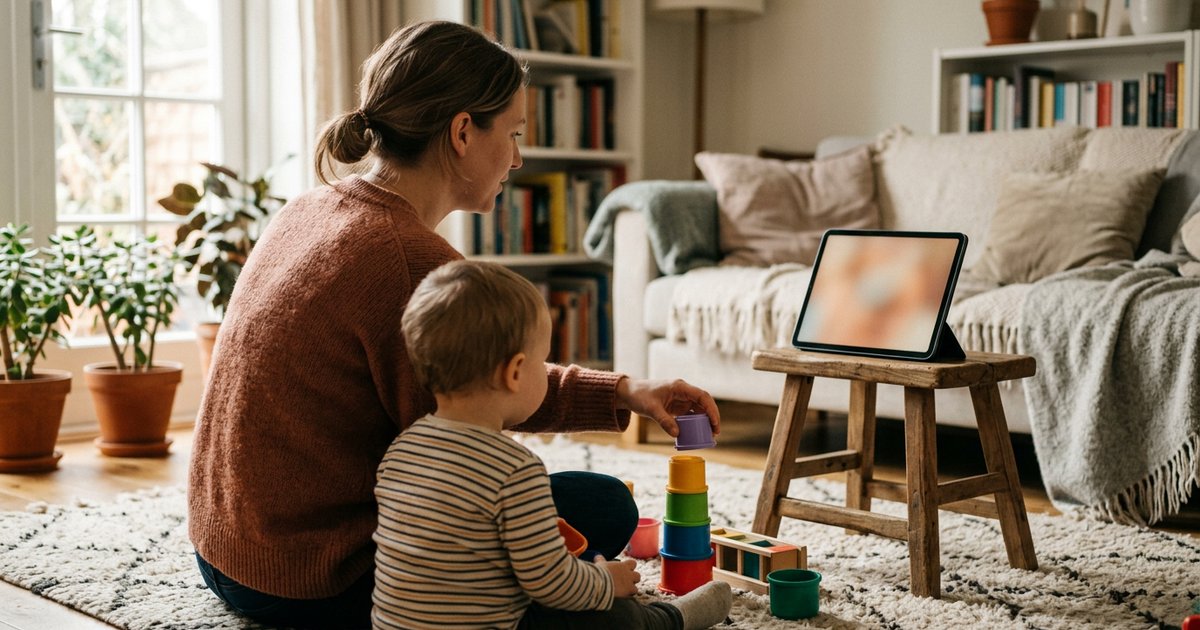
The surprise for most parents is that telehealth therapy for young children isn't really about the child sitting in front of a screen. It's about coaching you to create the progress in the places it counts most: your kitchen, your living room, your car, your bath time.
Think about how much of your child's day happens outside a therapy session. A therapist sees your child for 30 to 60 minutes a week. You're there for the rest. When parents learn simple, specific strategies and use them in everyday routines, that's where skills tend to stick.
In a typical telehealth session with a young child, your therapist might:
- Watch your child play in their own space and notice things that are easy to miss in a clinic
- Show you how to set up a play activity using toys and household items you already have
- Coach you in real time ("Try waiting three seconds before you help. Great, see how he looked at you?")
- Look at your actual mealtime setup, seating, and cups and utensils
- Give you one or two clear things to practice before next week
What Telehealth Does Really Well
It sees your child in their natural environment. A child may behave very differently at home than in a new room with new people. At home, we see how they really move, play, communicate, and eat.
It builds your confidence. Many parents tell us the biggest change isn't a skill — it's that they finally feel like they know what to do when things get hard.
It removes the logistics. No car seat battles, no missed naps, no sibling juggling, no traffic on the 5. Families in Temecula, Vista, or farther out in San Diego County can see the same therapist without the commute.
It's flexible. Illness, a busy week, or travel doesn't have to mean a missed session.
Who Telehealth Tends to Be a Great Fit For
Telehealth often works well for:
- Late talkers and toddlers working on early language and communication
- Picky eating and feeding concerns, especially when parent coaching and mealtime routines are the focus
- Sensory and emotional regulation support, where changes to routines and the home environment matter
- Parents who want a clear home plan and ongoing guidance
- Families who are busy, far from a clinic, or caring for a medically fragile sibling
Looking for more on how feeding support works? Learn about our feeding therapy services
When In-Home or In-Person Might Be a Better Fit
We believe in being honest about this. Telehealth isn't the right choice for every child or every goal. Hands-on support may be a better fit when:
- Your child needs physical hands-on help, such as for some motor or physical therapy goals
- There are safety concerns around feeding that call for in-person observation
- Your child is very young or very active and a screen-based format isn't workable
- You're simply more comfortable with someone in the room
The good news: you don't have to choose forever. Many families start with an in-home visit and move to telehealth, or mix both. We'll help you figure out what makes sense, and we'll tell you if we think another format would serve your child better.
Tips to Make a Telehealth Session Go Smoothly
You don't need to be techy or have a perfect house. Truly.
- Pick a spot with a little floor space and as few distractions as you can manage.
- Prop the device at child level on a stable surface so your therapist can see both of you.
- Gather a few toys or a snack (we'll tell you what's helpful beforehand).
- Expect imperfect. A child who wanders off, melts down, or hides under the table is still giving us useful information.
- Jot down one or two questions between sessions. That's where the best coaching happens.
You're Not Doing It "Wrong" If You Feel Unsure
Plenty of parents worry that therapy through a screen "isn't real therapy," or that they won't be good enough at the hands-on part. You don't have to be. Your therapist's job is to make it doable — breaking things into small steps that fit into the life you already have.
If your child is struggling and you've been putting off getting help because the logistics feel impossible, please hear this: asking for support is not a failure, and the format can be adjusted to fit your family.
Ready to See If Telehealth Is Right for Your Child?
At Eat. Play. Love. OT, we offer in-home and telehealth occupational therapy, speech therapy, feeding therapy, physical therapy, and parent support across San Diego County and Temecula. Not sure which is the right fit? That's exactly what a free consultation is for.
Book a free consultation and tell us what's going on. We'll listen, answer your questions, and help you decide on a next step that feels doable for your family.
We are in-network with United Healthcare, Optum, Tricare West, and Cigna/ASH.
We are a contracted provider with SDRC Early Start (vendor HQ2449) and Inland Regional Center (vendor PJ6193).
Based in Vista and serving Oceanside, Carlsbad, San Marcos, Encinitas, Temecula, and surrounding San Diego County, with in-home and telehealth visits available.