Infant to Toddler Feeding Development Milestones: A Parent's Guide
By Lindsey Wood, MOT, OTR/L
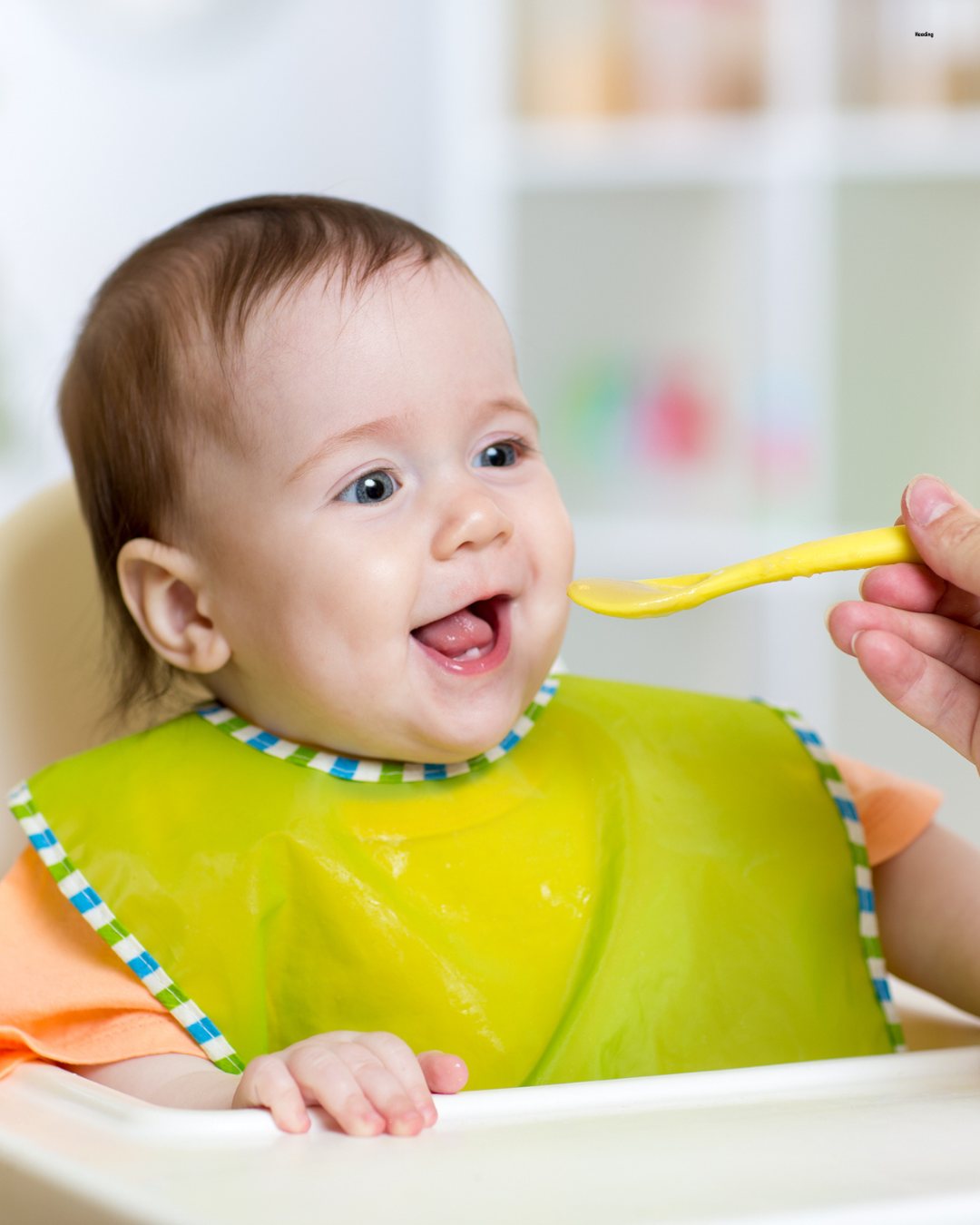
Most of us learn to eat without anyone teaching us, which makes it easy to assume eating is instinct. It isn't. Eating is the single most complex physical task a young child performs — it recruits more muscles, more nerves, and more coordination than walking does, and your baby has to do it several times a day while also breathing.
So when feeding gets hard, it is almost never because a child is being stubborn. It is usually because one piece of a very complicated skill hasn't come online yet.
This is the guide I give families who want to know what typical feeding development actually looks like — stage by stage, from the first days home through age three. Use it as a map, not a measuring stick. Real children hit these skills across a range, and a child who arrives somewhere a few weeks late is still very often on a perfectly normal path.
Free printable: we hand this out at our community screening days — every age band on one side, the red flags and low-pressure feeding tips on the other. Download the Birth to 5 Feeding Milestones handout (PDF) — no email required.
Birth to 3 months: reflexes do the work
Newborn feeding is entirely reflexive. Your baby roots toward a touch on the cheek, latches, and runs a suck-swallow-breathe pattern roughly once per second without a thought. The gag reflex sits far forward on the tongue — protective, and very easy to trigger.
At this stage the whole job is liquid: breast milk, formula, or both, typically 8 to 12 feeds a day. What you're watching for is rhythm and comfort. Feeding should look coordinated and end with a baby who seems finished rather than exhausted.
4 to 6 months: the body gets ready before the food arrives
Long before a first bite, your baby is building the equipment. Head control steadies. They begin to sit propped, then with less support. Hands and toys go in the mouth constantly, which is exactly how the mouth learns to tolerate new sensations. The gag reflex gradually migrates further back on the tongue, and the tongue-thrust reflex that pushes objects out begins to fade.
Readiness for solids is about these skills, not the calendar. Around six months, most babies show the full set: steady head control, the ability to sit with minimal support, interest in what you're eating, opening the mouth toward an approaching spoon, and the ability to keep food in the mouth rather than pushing all of it out.
First tastes are thin and smooth. Early on you'll see a suckle — a forward-back tongue motion. Munching, a simple up-and-down jaw movement, follows.
6 to 9 months: texture, and the tongue learns to move sideways
This is a bigger stage than it looks. Your baby sits independently, which frees up the trunk and jaw to work. Munching becomes reliable. Most importantly, tongue lateralization begins — the tongue starts moving food sideways toward the gums, which is the foundation of all real chewing.
Foods can thicken: mashed textures, soft lumps, and dissolvable solids like puffs or melts that require some management but forgive an immature chew. Your baby begins clearing food off a spoon with the upper lip instead of just accepting it. Cup drinking starts, with plenty of help and plenty of mess.
Expect gagging during this window. Gagging is not choking — it is a loud, protective, completely normal part of learning where the limits are. Choking is quiet.
9 to 12 months: self-feeding begins
The pincer grasp arrives, and with it the ability to pick up small pieces and get them to the mouth independently. Diagonal rotary chewing — a jaw that moves in a circle rather than just up and down — starts to replace munching. Soft table foods, well-cooked vegetables, and small tender pieces become manageable.
Your baby drinks from an open cup or straw with support and may hold their own bottle. Around the first birthday, most families begin the transition away from the bottle.
If you're in this stage and feeling stuck, our pediatric feeding therapy team works with San Diego families on exactly this transition — often in your own kitchen, at your own table.
12 to 18 months: table food and a very messy spoon
Chewing continues to mature. Your toddler self-feeds with fingers confidently and starts attempting a spoon, which will be spectacularly inefficient for months. That inefficiency is practice, not failure. Most chopped table foods are manageable. Open-cup and straw drinking improve, and bottle weaning typically completes.
18 to 24 months: skills consolidate, willingness wobbles
Rotary chewing is now well established. Utensil use improves and spilling decreases. Your toddler can handle most textures, including meats and raw crunchy vegetables in small pieces, and drinks well from an open cup.
Here is the part that surprises parents: this is also when many children get pickier, not less picky. Food neophobia — wariness of new foods — is a normal developmental stage that typically appears between 18 months and three years. A child who ate everything at ten months and refuses half of it at twenty months is usually doing something developmentally ordinary, not backsliding.
24 to 36 months: eating like the family
By age three, most children chew with a mature rotary pattern, use utensils competently, drink from an open cup without much spilling, and eat versions of whatever the family is eating. Mixed textures — a casserole, a sandwich, soup with pieces in it — become manageable, and mixed textures are genuinely harder than they look, because the mouth has to sort two things at once.
Variety matters more than volume at this age. A rough benchmark many feeding therapists use is a rotation of at least twenty accepted foods, with all major food groups represented somewhere in the list.
When to ask for help
Any one of these on its own may mean nothing. Several together, or one that persists, is worth a conversation with your pediatrician or a feeding therapist:
Feeding and growth: poor weight gain or falling off the growth curve; meals routinely taking longer than 30 to 40 minutes; frequent vomiting with meals.
Safety signs: coughing, choking, or a wet, gurgly voice during or after feeding; recurrent chest infections or pneumonia. These warrant prompt medical attention rather than watchful waiting.
Skill progression: no interest in solids by 9 to 10 months; still refusing all lumps or textures past 10 to 12 months; still eating only purees past 12 months; no attempt at self-feeding by 12 months; still relying on a bottle past 15 to 18 months.
Range and behavior: fewer than about 20 accepted foods; a food list that keeps shrinking rather than growing; losing foods that were previously accepted; whole food groups or textures missing entirely; distress, arching, or crying at nearly every meal.
That last cluster is the one families most often wait too long on. A shrinking list is different from ordinary picky eating, and it responds much better to early support than to time.
What actually helps
Feeding is a skill, which means it is teachable — and like every skill, it is built through low-pressure repetition rather than pressure. Children need to see, smell, touch, and play with a food many times before eating it becomes thinkable. Pressure to take "just one bite" reliably backfires, because it asks a child to override a body that is telling them no, and it teaches them that the table is a place where they lose control.
If you are worried, you are not overreacting, and asking early costs you very little. Sometimes an evaluation confirms that everything is on track and you get to stop worrying. Sometimes it catches something small while it is still small.
A note on this guide
These ranges describe typical development and are meant as general education, not medical advice or a diagnostic tool. Every child develops on their own timeline, and prematurity, medical history, and individual differences all shift these windows legitimately. If something about your child's feeding concerns you, please talk with your pediatrician or a licensed feeding therapist who can actually see your child.
Ready to talk it through? Book a free consult and we'll figure out together whether your child needs support — and if so, what kind.
Want this on your fridge? Download the free Birth to 5 Feeding Milestones handout (PDF).
We are in-network with United Healthcare, Optum, Tricare West, and Cigna/ASH.
We are a contracted provider with San Diego Regional Center Early Start (vendor HQ2449) and Inland Regional Center (vendor PJ6193).
We serve families in Oceanside, Carlsbad, Vista, San Marcos, Encinitas, Temecula, and the surrounding San Diego County area — in your home, in our Vista clinic, and virtually.
Related reading: "What Actually Happens at a Pediatric Feeding Evaluation?", "Why 'Just One Bite' Backfires With Picky Eaters (and What to Do Instead)", and "Why My Child Has Meltdowns: A Sensory Processing Explanation for Parents".