The homework folder comes out and something in the room changes.
Your child slumps. The pencil gets held in a fist, or pinched way up near the tip, or switched from hand to hand three times. Four words in, they're done — "my hand hurts," "this is too hard," "can you just write it."
Or maybe it's not homework yet. Maybe it's the zipper on the jacket every single morning. The buttons. The fork that keeps getting abandoned for fingers. The scissors that go in the drawer after twenty seconds of frustration.
You've probably wondered whether this is a focus thing, an attitude thing, or a "they'll grow out of it" thing.
Very often, it's a fine motor thing. And that's good news, because fine motor skills are extremely teachable.
What Fine Motor Skills Actually Are
Fine motor skills are the small, precise movements of the hands and fingers — the ones that let a child pick up a Cheerio, turn a page, work a zipper, hold a crayon, or open a snack pouch.
They're built on three things working together:
Hand strength. The muscles in the palm and fingers have to be strong enough to hold a position without fatiguing.
Coordination. The two sides of the hand have to do different jobs at the same time — thumb, pointer, and middle finger doing the delicate work while the ring and pinky fingers stabilize.
Sensory feedback. The child's brain has to know where their fingers are and how much pressure they're using, without looking. This is why some kids press so hard they tear the paper, and others write so lightly you can barely see it.
When one of those three pieces is underdeveloped, the whole task gets harder — and the child usually looks like they're avoiding it rather than struggling with it.
It Starts Way Before the Pencil
Here's the part that surprises most parents: fine motor skills don't start in the hands. They start in the core and shoulders.
A child has to be stable in their trunk to have a steady shoulder. They need a steady shoulder to control the elbow. They need a controlled elbow to have a quiet wrist. And they need a quiet wrist before the fingers can do anything precise.
This is why a child who slides down in their chair, wraps their legs around the chair legs, or props their head on one arm at the table is often not being lazy. Their body is working hard just to hold still — and there isn't much left over for the fingers.
It's also why so much good fine motor work looks nothing like fine motor work. Crab walks, wheelbarrow walks, monkey bars, and climbing at the park build the foundation that handwriting sits on top of.
What's Typical, Roughly, By Age
Every child moves at their own pace, and ranges are wide. These are general guideposts, not a scorecard:
12–18 months: Picks up small items with thumb and finger. Scribbles with a fisted grasp. Stacks two or three blocks.
2 years: Turns single book pages. Stacks 5–6 blocks. Imitates a vertical line.
3 years: Strings large beads. Snips with scissors. Uses a fork. Begins to hold a crayon with fingers instead of a whole fist.
4 years: Cuts along a line. Copies a circle and a cross. Manages large buttons. Uses a more mature three-finger grasp most of the time.
5 years: Writes their name. Cuts out simple shapes. Manages most fasteners. Uses utensils well.
6–7 years: Ties shoes. Writes legibly with reasonable speed and endurance. Handles small fasteners independently.
If your child is sitting well below these ranges — or if the gap seems to be widening rather than closing — that's worth a conversation, not a wait-and-see.
Signs Worth a Second Look
- Avoids coloring, drawing, cutting, or building activities other kids enjoy
- Complains their hand hurts or gets tired quickly with writing
- Still using a fisted or awkward pencil grasp past age 5–6
- Struggles with buttons, zippers, or utensils well past same-age peers
- Presses far too hard or far too lightly when writing
- Can't sit upright at a table without propping or slumping
- Gets frustrated or shuts down fast with anything requiring hand precision
- Handwriting is illegible or takes dramatically longer than peers
One of these on its own usually isn't much. A cluster of them, especially with frustration attached, is the pattern occupational therapists look for.
Not sure whether what you're seeing is typical? Our occupational therapy team can help you sort it out — in your home or over telehealth, throughout San Diego County.
Five Things That Actually Build Hand Strength
You don't need worksheets. Honestly, worksheets are often the least effective option, because a tired hand practicing a bad pattern just gets better at the bad pattern.
Try these instead:
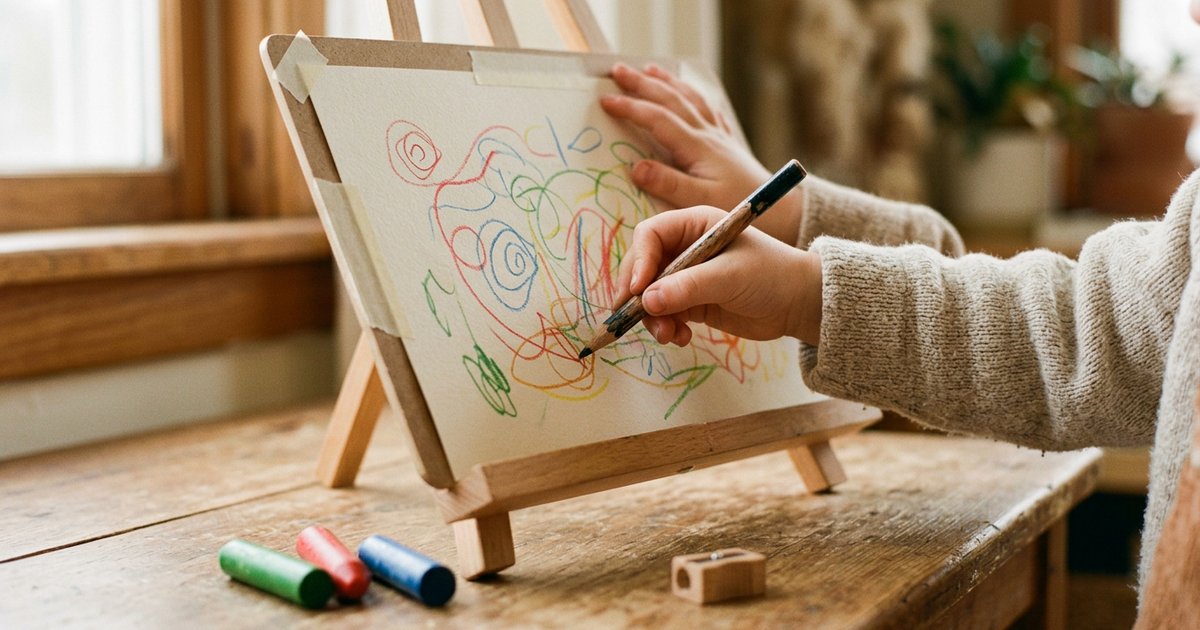
1. Vertical surfaces. Tape paper to the wall, use an easel, or color on the shower door with bath crayons. Working upright automatically puts the wrist in a better position and builds shoulder stability.
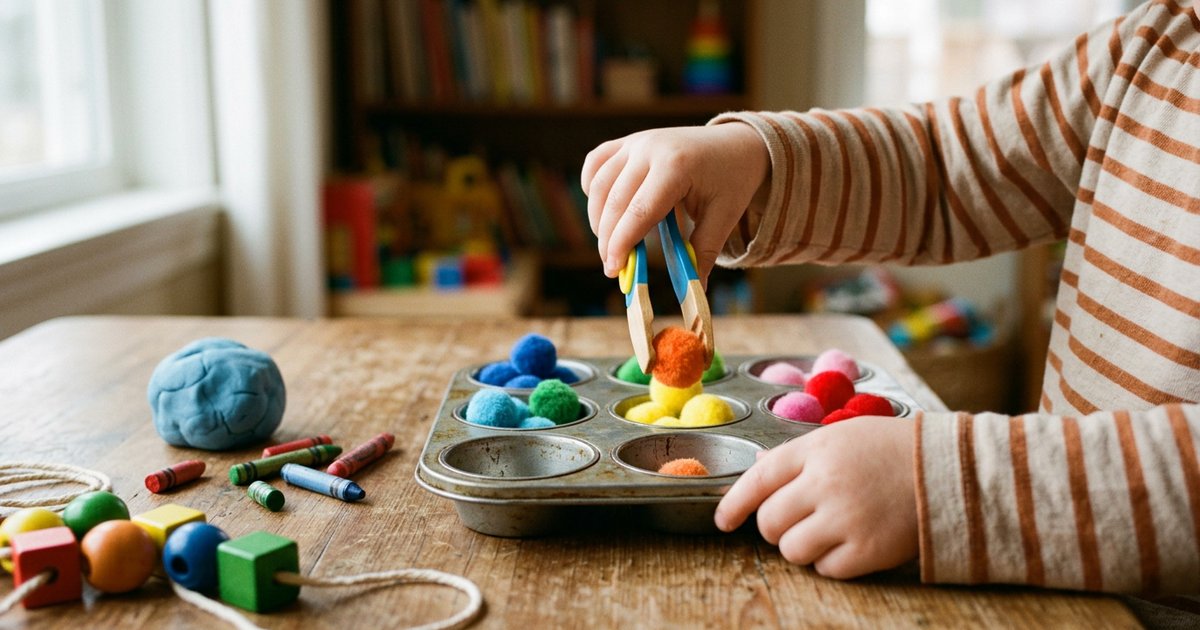
2. Anything that resists. Play dough, therapy putty, cookie dough, kneading bread, squeezing sponges in the bath. Resistance builds strength faster than tracing ever will.
3. Tiny objects, tiny tools. Broken crayons (they force a three-finger grip), golf pencils, tweezers, tongs, hole punches, stickers, coins into a piggy bank.
4. Weight through the arms. Animal walks, wall push-ups, helping carry groceries, pushing a laundry basket, playing on the monkey bars at the park. This is the foundation work.
5. Real-life tasks. Let them zip their own jacket even when you're running late. Let them open their own containers. Let them help stir, pour, and cut soft food. Everyday independence is fine motor practice that happens to also matter.
Five to ten minutes a day of the right kind of play does more than an hour of the wrong kind.
You Didn't Miss Something
If you're reading this feeling a little behind — like you should have been doing scissor practice at age three, or you should have caught it sooner — please let that go.
Fine motor development is genuinely hard to eyeball. It happens gradually, it varies enormously between kids, and the early signs look almost identical to normal preference. Plenty of parents bring their child in at six or seven, and plenty of those kids make beautiful progress.
There is no window that closes here. There's just support, and the sooner it feels doable for your family, the better.
When to Bring in an OT
An occupational therapist looks past the handwriting itself to figure out why it's hard — strength, coordination, sensory feedback, postural stability, visual motor skills, or some combination. Then we build a plan around what your specific child needs, and teach you how to weave it into a week you're already living.
Sessions look like play. Obstacle courses, games, building, crafts, silly challenges. Kids rarely realize they're working.
If your child is fighting the pencil, the zipper, or the fork, we'd love to talk. Book a free consultation with Eat. Play. Love. OT — we'll listen to what you're seeing and help you figure out the next step. No pressure, no diagnosis required, just a conversation.
We are in-network with United Healthcare, Optum, Tricare West, and Cigna/ASH.
We are a contracted provider with SDRC Early Start (vendor HQ2449) and Inland Regional Center (vendor PJ6193).
Based in Vista and serving Oceanside, Carlsbad, San Marcos, Encinitas, Temecula, and surrounding San Diego County, with in-home and telehealth visits available.